
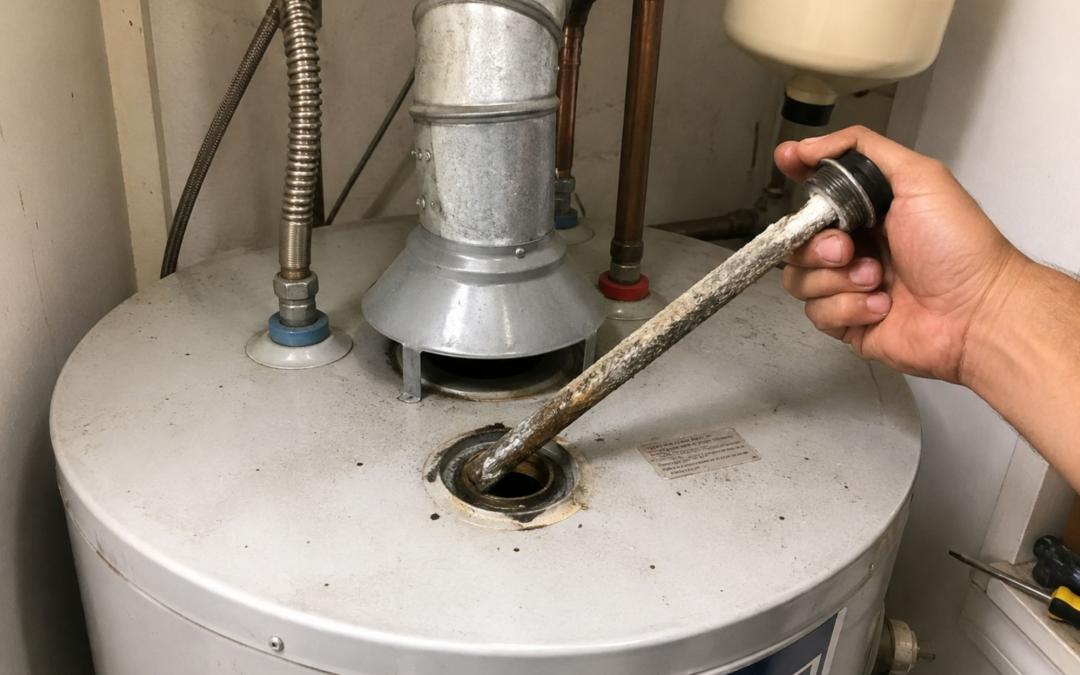
Anode rod replacement is a relatively small maintenance task that can help protect a tank-style water heater from internal corrosion. The rod is designed to corrode before the steel tank does. Once much of that sacrificial metal is gone, the tank has less protection against corrosion.
For homeowners in Jefferson Valley, knowing when to inspect the rod can help you make a better repair decision before tank damage develops. If you are unsure about the condition of your heater, professional water heater service can help determine whether the anode needs attention or whether another problem is involved.
What Does a Water Heater Anode Rod Do?
A water heater anode rod protects a steel storage tank by sacrificing its own metal to corrosion. Common sacrificial rods use magnesium, aluminum, or zinc-based materials. As the rod deteriorates, it helps reduce corrosion of exposed steel inside the tank, which is why its condition matters during water heater maintenance.
The rod usually extends downward into the tank from the top. It is not meant to remain unchanged for the life of the water heater. Its gradual deterioration is part of how the component works.
A depleted anode rod does not automatically mean the tank has failed. It means the protective material may no longer be doing its full job. Replacing a worn rod before serious tank corrosion develops can help extend the useful life of an otherwise sound water heater.
How Often Should You Inspect or Replace an Anode Rod?
There is no universal inspection schedule for every water heater. Some manufacturers recommend checking the anode annually, while others provide model-specific maintenance intervals. Follow the maintenance instructions for your exact water heater and base replacement on the rod’s actual condition rather than age alone, especially when water conditions may accelerate anode wear.
Homes with softened water may need annual or otherwise more frequent inspections because the anode can deteriorate faster under some softened-water conditions.
If the service history is unknown, an inspection can show how much sacrificial material remains and help establish a more appropriate schedule for that specific water heater.
Why Water Softeners Can Affect Anode Life
A water softener deserves extra attention. In some systems, softened water can cause a sacrificial anode rod to deteriorate more quickly. Homes with softened water may therefore need more frequent inspection based on the water heater manufacturer’s guidance.
The practical rule is simple: inspect according to the manufacturer’s instructions and replace the rod based on its actual condition rather than the calendar alone.
How Do You Know if an Anode Rod Is Bad?
The most reliable way to judge an anode rod is to remove and inspect it. Water discoloration, odor, or other changes may justify an inspection, but those symptoms can have several causes. A worn anode should not be diagnosed from hot-water appearance or smell alone.
A rod in good condition should still have a substantial amount of sacrificial metal around its core. Replacement may be appropriate when the rod has deteriorated significantly or several inches of its inner core wire are exposed.
Odor and Water Quality Can Have Other Causes
A rotten-egg odor also needs a closer look. Hydrogen sulfide odor can involve sulfur, bacteria, water chemistry, and reactions inside the water heater tank. Anode material may contribute to certain odor conditions, but simply replacing the rod may not solve the underlying issue.
When water chemistry may be involved, professional water testing and treatment services can help identify whether the problem is related to the water supply rather than the anode rod alone.
Can You Replace an Anode Rod Yourself?
Some homeowners may be able to replace an anode rod, but the job can involve hot water, pressure, gas, or electricity and should only be attempted when the manufacturer’s instructions can be followed safely. The water heater must be shut down correctly, pressure must be relieved, and a factory-installed rod can require considerable force to remove. If you are unsure about any part of the shutdown, removal, or restart process, professional service is the safer choice.
A typical manufacturer procedure includes shutting off the energy source and cold-water supply, allowing the water to cool, draining several gallons, locating the rod at the top of the tank, and removing it. Many conventional anode rods require a 1-1/16-inch socket and a suitable socket wrench, while a stubborn rod may require more leverage or an impact wrench.
The tank must also be completely refilled and air purged before an electric water heater is energized again. Running an electric unit without a full tank can damage the heating elements.
When DIY Anode Rod Replacement Gets Difficult
DIY replacement becomes less practical when:
- The anode will not loosen.
- There is little clearance above the tank.
- The heater shows leaking or significant corrosion.
- You are not comfortable shutting down and restarting the unit.
- The manufacturer’s instructions call for qualified service.
Always follow the instructions for your exact water heater rather than treating a general online procedure as universal. If access is difficult or the condition of the tank is uncertain, professional water heater repair may be the better option.
Which Type of Anode Rod Should You Use?
The correct replacement rod depends on the water heater and the water conditions. Magnesium, aluminum, and zinc-containing rods are common, but they are not interchangeable in every situation. Clearance above the tank also matters, and some models use specialized or powered anode systems rather than a basic solid rod.
| Rod type | What to know |
| Magnesium | Provides strong sacrificial corrosion protection but may be consumed more quickly under some water conditions. |
| Aluminum or aluminum alloy | Another sacrificial option that may be appropriate for certain water conditions or water-heater models. |
| Flexible or segmented | Useful when there is not enough overhead clearance to install a full-length rigid rod. |
| Powered anode | Uses an electrical system for corrosion protection and must be compatible with the water heater. |
The correct replacement rod should match the water heater manufacturer’s specifications and the design of the unit. Water conditions, softened water, available clearance, and the type of anode system can also affect which option is appropriate.
If odor is the concern, do not assume that switching rod materials will solve it. Water chemistry and bacteria may also need to be addressed.
When Does Anode Rod Replacement Stop Making Sense?
Anode rod replacement is most effective when the storage tank is still structurally sound and has not already been compromised by significant corrosion or a tank-body leak. A new anode rod can help protect a serviceable tank from future corrosion, but it cannot repair steel that has already rusted through or stop a leak caused by failure of the tank body.
Age, visible corrosion, recurring repairs, the source of a leak, and the overall condition of the heater should all be considered before putting money into another component. A professional water heater inspection can be useful when you are deciding between maintenance, repair, and replacement.
If water is leaking from the tank itself or significant corrosion is already present, replacing the anode rod may no longer address the main problem. In that situation, water heater replacement may need to be considered after the unit is inspected.
Protect the Tank Before Corrosion Takes Over
Anode rod replacement is preventive maintenance, not a cure for an already failed tank. Check the rod according to your manufacturer’s instructions, pay attention to water chemistry, and base replacement on the rod’s actual condition. Catching a depleted anode while the tank is still sound can help preserve its corrosion protection.
If you are unsure whether your anode rod needs replacement or whether the tank has another problem, Goldberg Plumbing & Heating can inspect your water heater and explain the appropriate repair or replacement options. Contact the team for clear guidance and dependable water heater service without unnecessary upselling.
FAQs
Can I replace an anode rod myself?
Possibly, but check your manufacturer’s instructions first. Removing the old anode rod may require a large socket and significant torque, and the water heater must be shut down and restarted correctly. If the rod is stuck or you are uncomfortable working around gas, electricity, or hot water, professional service is the safer choice.
How often should you replace your anode rod?
There is no universal replacement interval. Some maintenance guidance calls for inspection every few years, while certain manufacturers recommend checking the rod more frequently based on water conditions and usage. Follow the instructions for your heater and replace the rod when inspection shows substantial depletion.
How much does it cost to replace an anode rod?
The total cost varies by water-heater model, replacement rod, accessibility, local labor, and whether removal requires extra work. The rod itself may be relatively inexpensive compared with replacing a water heater, but the part price alone is not the complete cost of the job. A model-specific estimate is more useful than a universal online price.
How do I know if an anode rod is bad?
Physical inspection is the clearest test. Replacement may be appropriate when much of the sacrificial metal has deteriorated, or several inches of the inner core wire are exposed. Discolored or foul-smelling hot water may justify inspection, but those symptoms can also come from other water-quality or plumbing conditions.
Does a water softener make an anode rod wear out faster?
It can. In some systems, softened water can cause a sacrificial anode rod to deteriorate more quickly. Homes with water softeners may therefore need more frequent anode inspections based on the water heater manufacturer’s recommendations and local water conditions.