
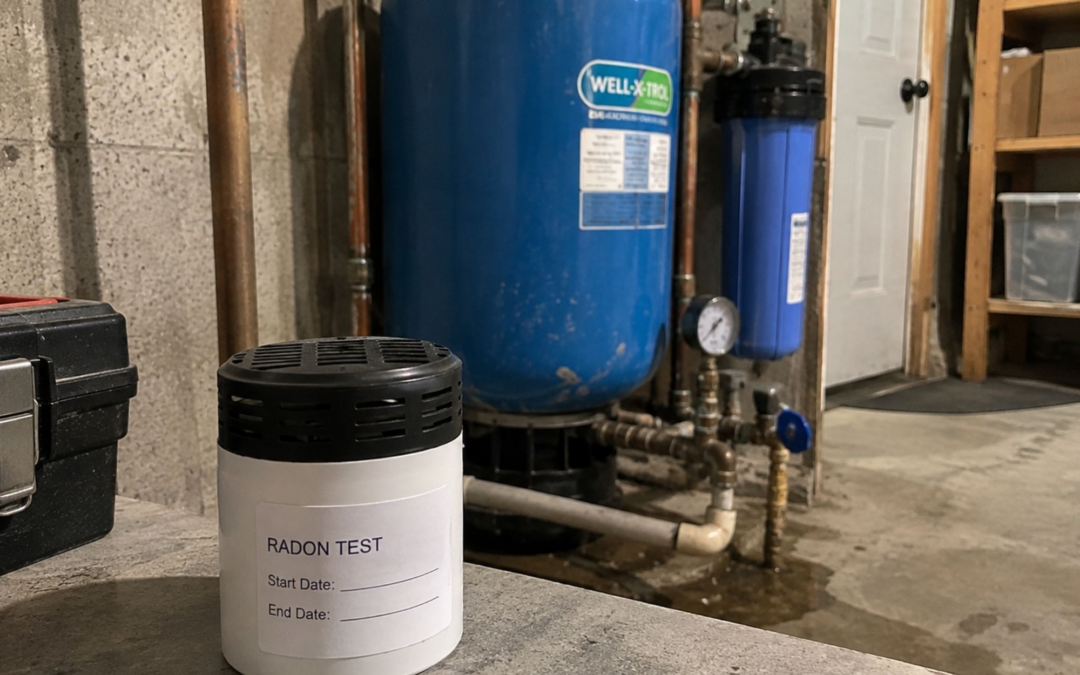
If your Mahopac home gets its water from a private well, radon may be one of the contaminants worth testing for. Radon in well water has no color, smell, or taste, so there is no way to spot it during normal water use. It can be present even when the water looks and tastes perfectly normal.
A test gives you something useful to work with. From there, you can look at whether the water is contributing to radon exposure inside the home and whether a treatment system such as aeration makes sense for your well.
What Is Radon in Well Water?
Radon in well water is a naturally occurring radioactive gas that has dissolved into groundwater. It forms as uranium and radium in rock and soil break down over time. A private well can draw this groundwater into your home along with the rest of your water supply.
This is different from a plumbing problem that develops inside the house. Pipes, fixtures, and water heaters do not create radon. The gas originates underground, which is why the amount found in one well can be very different from the amount found in another nearby well.
Private wells also differ from surface-water supplies. Radon in lakes and reservoirs has more opportunity to escape into outdoor air. Groundwater stays in closer contact with surrounding rock and soil, giving radon a chance to dissolve into the water before it reaches a well.
Why Does Radon in Well Water Matter?
The main concern with radon in well water is not simply that the gas is dissolved in something you drink. Radon can leave the water after it enters your home and become part of the indoor air you breathe. Showering, washing dishes, doing laundry, and using water throughout the day can all release some dissolved radon.
Long-term radon exposure is associated with lung cancer. The EPA identifies radon as the second-leading cause of lung cancer in the United States and estimates that it contributes to about 21,000 lung cancer deaths each year. EPA guidance explains the health effects of radon exposure.
That does not mean a positive water test tells you exactly how much radon is in your home’s air. Radon can also enter a building from the soil underneath and around the foundation. This is why it makes sense to look at water and indoor-air testing as two separate pieces of the same question.
How Do You Test for Radon in Well Water?
The only reliable way to know whether a private well contains radon is to have the water analyzed by a laboratory certified by the New York State Department of Health Environmental Laboratory Approval Program (ELAP) for radon testing in potable water. Because radon is a gas, collecting the sample requires more care than many routine water tests. Radon can escape if the water is splashed, aerated, or left exposed to air.
Follow the laboratory’s sampling instructions carefully. The process may include:
- Choosing a laboratory certified through the New York State Department of Health ELAP program to analyze radon in potable water.
- Using the sample container supplied or approved by the laboratory.
- Collecting the sample from the location specified by the laboratory.
- Filling the container carefully to minimize splashing and air bubbles.
- Recording the collection information requested by the laboratory.
- Returning the sample within the laboratory’s required timeframe.
It is also useful to test the home’s indoor air for radon. A water test measures the radon dissolved in the well water, while an indoor-air test measures the radon present in the home from all sources. Looking at both results can help determine whether the well water may be contributing to indoor radon exposure.
What Radon Level in Well Water Is Considered High?
Radon-in-water numbers can be confusing because there is no current New York State recommended action level for radon in well water. Some values commonly found online come from proposed EPA drinking-water standards for community water systems, while the familiar 4 pCi/L figure applies to indoor air, not well water.
Here is the distinction:
| Number | What it refers to |
| 4 pCi/L | EPA action level for radon in indoor air |
| 300 pCi/L | Proposed EPA drinking-water level for community water systems |
| 4,000 pCi/L | Proposed alternative level tied to a multimedia mitigation approach |
The 300 and 4,000 pCi/L values were proposed but never finalized, and they are not current action levels for private wells. New York State provides guidance on radon in private well water and treatment.
This is why a well-water result should not be judged by one number found online. It makes more sense to consider the water test together with indoor-air radon results and the conditions of the home’s well-water system.
How Is Radon Removed From Well Water?
Radon treatment is usually installed where the well water enters the home rather than at a single kitchen faucet. Treating the water at this point addresses water used throughout the house, including showers, laundry, sinks, and appliances. Aeration and granular activated carbon are the two primary approaches.
Aeration Treatment
An aeration system is designed to move radon out of the water before the water is distributed through the home. The equipment brings water and air into contact with each other, allowing dissolved radon to leave the water. The radon-containing air is then vented outdoors.
This approach deals with the gas differently from a filter. Instead of collecting radon in media, aeration removes it from the water and directs it outside.
New York State reports typical radon reductions of about 95% to 99% for aeration systems used on private wells. That range is useful for understanding the technology, but it is not a promise for every home. Actual performance depends on equipment design, water conditions, installation, maintenance, and household demand.
What an Aeration System Has to Work With
A treatment system cannot be considered separately from the rest of the well system. Water pressure, pump capacity, flow rate, storage, existing filtration, and available installation space can all affect how the equipment needs to be configured.
For example, a system still needs to supply enough treated water when several fixtures are being used. It also needs a proper way to vent the removed radon outdoors. Periodic cleaning and maintenance matter because mineral buildup and other water-quality conditions can affect equipment over time.
That is why the laboratory result is the starting point, not the entire treatment plan.
What About Granular Activated Carbon?
Granular activated carbon, or GAC, can also reduce radon in well water. Instead of releasing the gas through aeration, the system passes the water through carbon media that captures the radon. It is a simpler concept, but the way the media handles radioactive material needs to be considered.
New York State lists typical reductions of about 85% to 99% for GAC systems. It also notes that radioactive decay products can accumulate on the carbon over time. That can affect how the media should be serviced, replaced, and disposed of.
Here is a simple way to compare the two approaches:
| Aeration | Granular Activated Carbon |
| Removes radon from the water and vents it outside | Captures radon in carbon media |
| Typically offers strong radon reduction | Can also provide substantial reduction |
| Requires proper outdoor venting | Requires carbon media replacement |
| Has pumps, controls, and other mechanical components | Has fewer mechanical treatment components |
| Needs cleaning and maintenance | Requires consideration of radioactivity accumulating in the media |
The better option depends on the actual water test, system layout, water chemistry, maintenance needs, and other conditions at the property.
Is It Safe to Drink Well Water With Radon?
There is no single New York State radon-in-water number that separates “safe” water from “unsafe” water. The better question is what the test result means for the home’s overall radon exposure and whether the water is contributing enough radon to justify treatment.
The established health concern with radon is lung cancer from breathing the gas over time. Research has also examined possible risks from ingesting radon in drinking water, but EPA currently identifies lung cancer as the only health effect definitively linked to radon exposure.
If radon is found in the well, it makes sense to look at both water and indoor-air results before deciding what to do. This gives you a clearer picture of where exposure may be coming from instead of treating the water result in isolation.
Can Radon in Well Water Raise Indoor Radon?
Yes, some radon dissolved in water can enter indoor air when you use the water. Showering is an easy example because water is sprayed into small droplets in an enclosed room, but radon can also be released during cooking, cleaning, laundry, and ordinary faucet use.
The important point is that well water may not be the only source. Radon can also move directly from the soil into a home through openings around the foundation and other entry points.
If indoor-air radon is elevated, testing the well can help determine whether the water may be adding to the problem. If the water result is low, attention may need to remain on other sources. Either way, direct testing is more useful than trying to estimate one result from the other.
When Should You Have Your Water System Evaluated?
A water system evaluation becomes useful after you have a laboratory result and want to understand what treatment would involve. A good evaluation does not start by assuming every positive radon result needs the same equipment. It looks at the result together with the way water is supplied and used in the home.
A professional water system analysis can take into account water pressure, well-pump operation, flow requirements, pressure tanks, existing filters or treatment equipment, and the space available for additional components.
This is especially important when considering aeration. The treatment system needs to reduce radon while still allowing the household water system to function correctly. Testing gives you the reason to consider treatment, while evaluating the full water system helps determine what a practical setup would require.
Start With the Water, Not the Equipment
If you are concerned about radon in your well, start with a proper water test and an indoor-air radon test. Those results give you a much better basis for deciding what comes next. If water treatment is needed, the system should be selected around the actual radon result and the way your existing well-water system works.
Once you have those results, the next step is understanding how treatment would fit your home and water system. Goldberg Plumbing & Heating can help evaluate your private well-water setup and explain the available options based on the conditions found. Contact us to schedule a water system evaluation.
FAQs
How do you treat radon in well water?
Aeration and granular activated carbon are the two main treatment methods. Aeration removes dissolved radon from the water and vents it outdoors, while GAC captures radon in carbon media. The best approach depends on the laboratory result and the conditions of the home’s well and water system.
Is it safe to drink water with radon?
There is no current New York State action level that gives homeowners a simple pass-or-fail answer for radon in well water. The more established health risk comes from breathing radon over time after it enters indoor air. If testing finds radon in your well, consider the water result together with an indoor-air radon test.
How common is radon in well water?
Radon can occur in private wells because groundwater comes into contact with rock and soil containing naturally occurring uranium and radium. The amount can vary significantly between properties. Even homes in the same general area can have different water results, so an individual well needs to be tested.
How can you tell if radon is in your water?
You cannot tell by looking at the water or by its taste or smell. A laboratory test specifically for radon in water is needed. The sample should be collected according to the laboratory’s instructions because allowing the water to splash or aerate can let radon escape before testing.