
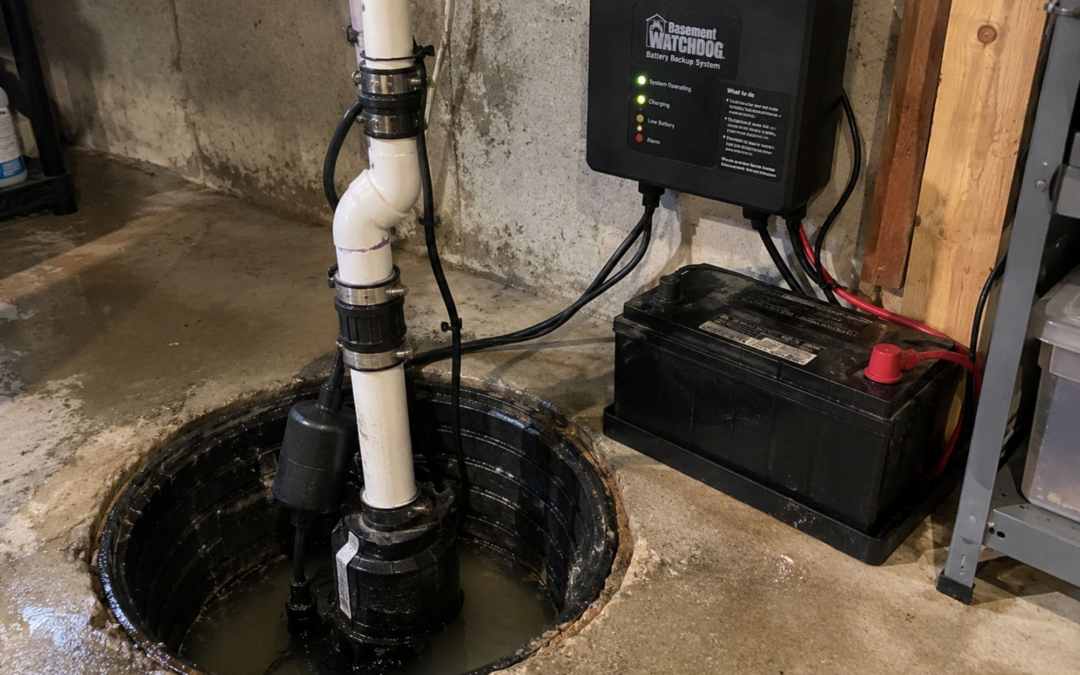
A sump pump battery backup gives your basement another layer of protection when the electricity goes out, or the primary sump pump cannot keep up with rising water. This matters because the same storms that bring heavy rain can also cause power outages, leaving an electric sump pump unable to run while groundwater continues entering the sump pit. For homeowners in Yorktown Heights, having a properly selected backup system can help keep water moving until normal power returns.
A battery backup is more than a battery connected to an existing pump. Most systems include a separate backup pump, battery, charger, float or sensor, and controls that work alongside the primary sump pump. Understanding how those parts work together makes it easier to decide whether your basement needs backup protection and what should be checked before adding one.
How Does a Sump Pump Battery Backup Work?
A sump pump battery backup normally stays ready while the primary electric pump handles everyday groundwater. If electrical power fails, the main pump stops working, or water rises above its normal operating level, the backup float or sensor can activate a separate battery-powered pump. That pump then moves water out of the sump basin through the home’s discharge piping.
The primary and backup pumps have different jobs. The primary pump handles normal water entering the pit, while the backup pump provides another pumping option when the primary system cannot operate normally. Liberty Pumps, for example, describes its Model 441 as a 12-volt backup system intended to work alongside a primary 120-volt sump pump rather than replace it.
Many battery backup systems also monitor operating conditions and provide an alarm when something needs attention. Depending on the equipment, an alert may indicate that the backup pump has operated, utility power has failed, water is unusually high, or the battery has a charging problem. Those warnings are useful because a backup system may sit quietly for months before it is suddenly needed.
Why Can a Power Outage Put Your Basement at Risk?
Losing electricity does not stop groundwater from reaching a sump pit. Water may continue entering through foundation drainage, perimeter drains, or groundwater seepage even though the main electric pump can no longer remove it. If the pit fills faster than the available system can discharge the water, the level can eventually rise high enough to reach the basement floor.
That combination makes storm-related outages particularly concerning for homes where the sump pump runs frequently during wet weather. A home with regular groundwater entering the pit has different backup needs than one where the sump pump operates only occasionally. The amount of water entering the basin should therefore be considered when choosing the size and capacity of a backup pump.
A battery backup helps cover the period when normal pumping is unavailable, but it should not be viewed as unlimited protection. Its performance depends on how much water is entering, how much the backup pump can move, the battery’s available capacity, and how long the outage lasts. Homes with sump-related concerns can also benefit from having their existing sump pump repair and replacement system evaluated before adding backup equipment.
How Long Will a Sump Pump Battery Backup Run?
There is no single runtime that applies to every battery backup sump pump. Battery capacity matters, but runtime also changes with the pump’s electrical demand, how frequently it cycles, the amount of water entering the pit, the height water must be lifted, and the condition of the battery. A pump that turns on briefly every few minutes may use its stored energy very differently from one that must run almost continuously.
Manufacturer specifications help show why fixed runtime promises can be misleading. Zoeller states that its AquaNot Spin 508 can provide up to six hours of continuous pumping on a fully charged battery and longer operation when the pump cycles intermittently. Those figures apply to that particular system and defined operating conditions, so they should not be treated as a universal expectation for every sump pump setup.
Vertical lift also affects pump performance. Water that must travel farther upward creates more resistance for the pump, and manufacturer performance charts show that flow rates generally decrease as pumping head increases. This is why backup selection should consider the actual sump pit and discharge layout rather than relying on a battery label alone.
How Long Will a 100 Amp-Hour Battery Run a Sump Pump?
A 100 amp-hour battery rating does not provide enough information to determine an exact sump pump runtime by itself. Amp-hours describe battery capacity under defined conditions, but operating time also depends on how much current the pump uses and how frequently the pump needs to run. Battery voltage, age, condition, temperature, and state of charge can further affect how much usable energy is available.
Water conditions play an equally important role. During moderate rainfall, a backup pump may cycle occasionally and remain off for much of the outage. During heavy groundwater inflow, the same pump may run much more frequently and use its available battery capacity faster.
Manufacturer instructions provide a better reference than a generic battery calculation. For example, Zoeller recommends a 12-volt, 105 amp-hour deep-cycle battery or larger for one AquaNot system and notes approximately five hours of continuous pumping at eight feet of head under the stated conditions. The same guidance explains that intermittent pumping can extend available operating time, showing why actual runtime depends heavily on the installation.
Can You Put a Battery Backup on an Existing Sump Pump?
In many homes, a battery backup can be added without removing a working primary sump pump. The backup typically functions as a second pumping system rather than as a replacement for the existing unit. When rising water reaches its float or sensor, the backup pump activates independently and helps remove water while the primary pump is unavailable or unable to keep up.
The existing sump basin still has to accommodate the additional equipment. There must be room for the backup pump and float to operate without interfering with the primary pump, while the discharge piping must allow both pumps to move water correctly. Pipe size, check valves, fittings, vertical lift, and the final discharge point can all affect how the system performs.
For that reason, adding a backup is not simply a matter of placing another pump in the pit. A cramped basin, improperly positioned float, restricted discharge line, or aging primary pump may need attention first. Looking at the complete setup helps determine whether a separate backup can be added to the current system or whether other changes would make more sense.
What Should You Look for in a Battery Backup System?
A good backup system should be selected according to the water it may need to move rather than battery size alone. Pump capacity, vertical lift, available basin space, discharge piping, battery requirements, and expected water inflow all influence performance. The goal is to choose a backup pump that can reasonably handle the conditions it may face when the primary pump is unavailable.
Monitoring features can also be useful because backup systems often spend long periods waiting for an emergency. Depending on the model, controls may provide alerts for power loss, high water, pump operation, switch problems, or battery conditions. Both Liberty Pumps and Zoeller publish systems with monitoring or alarm features designed to help homeowners recognize problems before or during an outage.
Battery compatibility should also follow the pump manufacturer’s specifications rather than guesswork. Many backup sump pumps use 12-volt deep-cycle batteries, but required battery size and construction can vary by system. The battery, pump, charger, floats, and controls are designed to operate together, so selecting compatible components matters as much as choosing a large-capacity battery.
Does a Battery Backup Replace Sump Pump Maintenance?
A battery backup does not remove the need to maintain the primary sump pump. The main pump remains responsible for everyday groundwater, while the backup provides another line of protection when normal operation is interrupted. A weak primary pump, blocked discharge line, stuck float, or other existing problem should be corrected rather than simply covered up by adding another pump.
The backup system also needs periodic attention. The float should move freely, battery connections should remain in good condition, and chargers or control panels should not show unresolved warning indicators. Homeowners can include the sump pump when completing routine seasonal plumbing maintenance checks, particularly before periods of heavy rainfall.
It is also worth checking where the discharge water goes after it leaves the pump. Even a capable backup cannot move water effectively if the discharge line is blocked, frozen, restricted, or arranged in a way that allows water to return toward the foundation. Looking at the complete path from the pit to the drainage point provides a better picture of whether the system is ready for an outage.
Keep Your Sump Pump Backup Ready
A dependable sump pump backup involves more than placing a battery beside the sump pit. The primary pump, backup pump, battery, charger, floats, alarms, discharge piping, and drainage conditions must work together when normal electricity is unavailable. Checking the entire system before periods of heavy rain can help uncover problems such as a weak battery, restricted discharge piping, poor float placement, or a backup pump that does not match the home’s water conditions.
If you are considering adding backup protection or want an existing sump system reviewed, Goldberg Plumbing & Heating can evaluate the sump basin, pumps, discharge piping, and available backup options. A licensed professional can explain what the current installation can support and whether changes are appropriate. Contact us if you would like help reviewing your sump pump setup or backup options.
FAQs
Are sump pump battery backups worth it?
A battery backup can be useful when a basement depends on an electric sump pump, and groundwater may continue entering during a power outage. It provides another way to remove water when the primary pump cannot operate normally. Whether a backup makes sense for your home depends on water conditions, how often the existing pump runs, outage risk, and the condition of the current sump system.
Can you put a battery backup on an existing sump pump?
Many battery backup systems are designed to operate alongside an existing primary sump pump. The sump basin needs enough room for both pumps and their floats, and the discharge arrangement must support proper water flow. Checking the existing pump, piping, pit size, and installation conditions first helps determine which backup arrangement is appropriate.
How long will a battery backup run a sump pump?
Runtime varies because a backup pump does not necessarily operate continuously throughout an outage. Battery capacity, pump demand, water inflow, pumping frequency, vertical lift, and battery condition all affect how long stored energy remains available. Manufacturer runtime figures are most useful when considered together with the conditions under which the system was tested.
How long will a 100 amp-hour battery run a sump pump?
A 100 amp-hour rating alone cannot provide an exact answer because the pump’s electrical demand and operating pattern also matter. A pump that cycles occasionally during moderate groundwater conditions may use the battery much more slowly than one running almost continuously. The pump manufacturer’s battery requirements and performance information provide a better basis for estimating runtime for a particular system.