
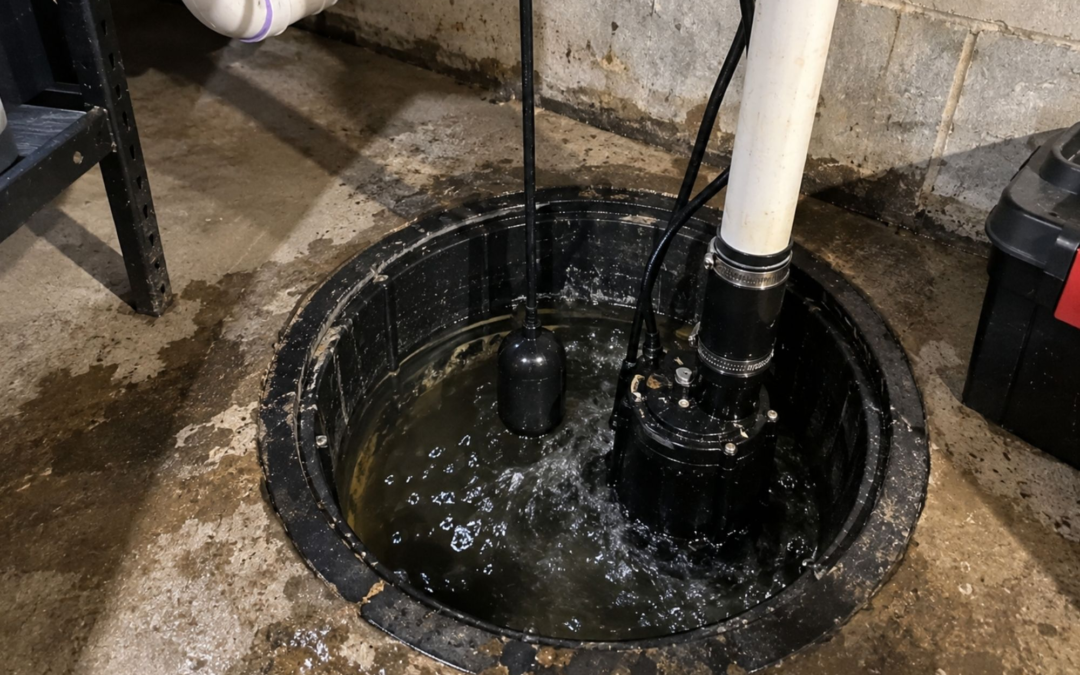
A sump pump keeps running when the system is still sensing water, cannot move water out fast enough, or has a problem that prevents it from shutting off. For homeowners in Jefferson Valley, constant operation can be especially concerning during heavy rain because the pump may be working hard when you need it most.
Some causes are simple to spot, such as a float switch that cannot move freely. Others require checking the discharge line, check valve, water inflow, or pump condition. Understanding what the pump and water level are doing can help you decide whether the issue needs a simple check or professional inspection.
Why Does My Sump Pump Keep Running?
A sump pump can run constantly because the float switch is stuck, water is flowing back into the pit, the discharge line is blocked, groundwater is entering faster than the pump can remove it, or the pump is not matched to the system. The pattern you see in the pit can help narrow the possible cause.
1. The Float Switch Is Stuck or Faulty
The float switch tells the pump when to turn on and off as the water level changes. As water rises, the float moves upward and activates the pump. As the pit empties, the float should drop and allow the pump to shut off.
If the float is caught against the pit wall, tangled with a cord, blocked by debris, or mechanically faulty, the pump may stay on even after the water level drops. This is one of the first things to look at when the pit is nearly empty, but the pump is still running.
A stuck float does not always mean the pump itself needs replacement. The switch, its position, or something interfering with its movement may be the actual problem.
2. The Check Valve Is Letting Water Flow Back
The check valve sits in the discharge line and helps stop pumped water from returning to the sump pit after the pump shuts off. Pentair explains that a sump pump check valve works as a one-way valve that prevents discharged water from flowing back into the basin.
When the check valve does not work correctly, the pump may remove water, shut off, and then restart as water returns to the pit. That is different from a motor that stays on without stopping.
Listen after the pump shuts off. If you hear or see a noticeable amount of water flowing back into the pit, the check valve may be one part of the system that needs to be inspected.
3. The Discharge Line Is Clogged or Frozen
The discharge pipe carries water away from the sump pump and out of the home. If the line is clogged, crushed, blocked at the outlet, or frozen, the pump may continue running while the water level remains high.
A cold-weather blockage is worth considering when the problem begins during freezing conditions. Snow, ice, debris, or another restriction at the discharge point can interfere with water leaving the system. Look at the visible discharge outlet from a safe location and check for an obvious obstruction. Do not assume the pump itself has failed until the discharge path has also been considered.
4. Too Much Water Is Entering the Sump Pit
A sump pump may run for long periods during heavy rain, snowmelt, or periods of high groundwater. If the pit refills almost as quickly as the pump empties it, the pump may simply be handling a large amount of incoming water.
The pattern becomes more important when constant inflow continues during dry weather. A high water table, drainage condition, or another water source may be feeding the pit even when it has not recently rained.
In this situation, the pump may still be operating as intended but may not be able to reduce the water level enough to reach its normal shutoff point. The cause of the water inflow may need to be investigated along with the pump itself.
5. The Pump May Be Undersized for the Job
An undersized sump pump can run for long periods when water enters the pit faster than the pump can discharge it. However, pump sizing should not be based only on horsepower or a single gallons-per-hour rating.
Actual pump performance depends on the system. Water inflow, vertical lift, pipe length, fittings, and resistance in the discharge line can all affect how much water a pump can move under real operating conditions.
A plumber can compare the installed pump with the piping and water conditions before determining whether the pump is properly matched to the system. This helps avoid replacing a working pump with another unit that does not address the underlying issue.
6. The Pump Has a Mechanical or Electrical Problem
A damaged impeller, motor issue, switch failure, or electrical problem can also cause abnormal sump pump operation. Warning signs may include humming, grinding, vibration, low discharge flow, repeated breaker trips, or a pump that appears to run without moving much water.
These symptoms do not confirm one specific failure. Several components can produce similar signs. If the pump makes unusual noises, repeatedly trips a breaker, or cannot lower the water level, do not take it apart while it is connected to power. If the breaker trips repeatedly, stop resetting it and have the pump and electrical supply evaluated by a qualified professional.”
What Should You Check If Your Sump Pump Runs Constantly?
Start by observing the water level, float movement, and discharge flow without placing your hands inside a powered sump pit. If the pump needs to be touched, opened, or adjusted, disconnect power first and follow the manufacturer’s safety instructions. The way the system behaves before, during, and after a cycle can provide useful clues.
First, look at the float. It should have enough room to move without being wedged against the pit wall, pump, piping, or electrical cord. If the water level is low but the float remains raised, the switch may not be reaching its normal shutoff position.
Next, watch the water. Does the pit empty normally? Does the water level barely change? Does water rush back into the pit after the pump shuts off? Does the pit refill quickly even when it is not raining?
These observations can help narrow the possibilities:
| What You Notice | Possible Explanation |
| Pump runs with very little water in the pit | Stuck or faulty float switch |
| Pump shuts off, then starts again quickly | Check valve backflow or rapid water inflow |
| Pump runs but the water level barely drops | Blocked discharge line, pump problem, or very high inflow |
| Pump runs mainly during heavy rain | High groundwater volume or pump capacity issue |
| Pump runs in dry weather and the pit keeps refilling | High water table, drainage issue, or another water source |
| Pump makes unusual noises or moves little water | Mechanical problem or blockage |
A symptom is only a clue. It does not provide a complete diagnosis, and more than one issue can occur at the same time.
Is It Okay for a Sump Pump to Run Continuously?
A sump pump may run for an extended period when a large amount of groundwater is entering the pit, especially during heavy rain. However, nonstop operation should not be treated as normal without checking what is causing it. If the water level has dropped but the motor stays on, or the water level remains high despite constant pumping, the system needs attention.
Long run times also add operating hours to the motor and other internal components. A pump that rarely reaches a normal off cycle may experience more wear, particularly if it is struggling against a blockage or running with very little water in the pit.
If the water level continues to rise, the breaker trips, the pump begins making unusual noises, or water starts entering the basement, professional inspection is appropriate.
How Can You Tell Constant Running From Short Cycling?
Constant running means the pump motor stays on without reaching its normal shutoff point. Short cycling means the pump turns off but starts again after a very short pause. Knowing which pattern you have can help narrow the possible causes.
If the motor keeps running even after the pit becomes low, the float switch and controls are reasonable areas to investigate. If the pump shuts off and you then hear water flowing back into the pit, the check valve becomes a stronger possibility because its purpose is to prevent discharged water from returning.
Rapid cycling can also happen when water enters the pit very quickly or when the basin provides little storage between the pump’s starting and stopping levels.
When describing the problem to a plumber, be specific. Saying, “the pump never shuts off” provides a different clue than saying, “the pump shuts off but starts again almost immediately.”
When Should You Call a Plumber for a Constantly Running Sump Pump?
Professional inspection is appropriate when the pump will not shut off after the water level drops, the pit stays high while the pump runs, water repeatedly flows back into the basin, or the discharge line cannot be checked safely. Unusual noises, weak discharge flow, electrical problems, or repeated breaker trips also deserve attention.
A sump pump that continues running heavily during dry weather is another reason to investigate. Without rainfall as an obvious source, the system could be dealing with persistent groundwater, backflow, a stuck float, drainage conditions, or another source of water entering the pit.
Avoid replacing the pump based on one symptom alone. A float switch, check valve, discharge restriction, or sizing issue can sometimes create behavior that looks like pump failure. Professional plumbing services can help identify the cause before repair or replacement decisions are made.
How Can You Reduce the Chance of a Sump Pump Running Constantly?
Regular checks can help uncover some sump pump problems before a long storm or high-water period exposes them. Keep the sump pit free of loose debris, make sure the float has room to move, watch the discharge outlet for blockage, and follow the pump manufacturer’s instructions for testing and maintenance.
A simple water test can help show whether the pump starts and stops normally. Add water slowly to the pit until the float activates the pump, then watch whether the water level falls and the pump shuts off at the expected point. Do not reach into the pit while the pump is connected to power.
The discharge outlet also deserves attention. Keep the visible outlet clear of leaves, snow, ice, and other debris that could restrict water flow.
A battery-powered backup sump pump can provide protection during a power outage, while a properly configured secondary pump can provide additional pumping capacity or redundancy if the primary pump cannot keep up or fails. Neither option corrects a stuck float switch, failed check valve, clogged discharge line, or incorrectly matched primary pump, so the underlying problem still needs to be addressed
Get the Cause Checked Before the Next Heavy Rain
When a sump pump keeps running, replacing the pump is not always the answer. The cause may involve the float switch, check valve, discharge line, groundwater inflow, pump sizing, or an internal problem. Watching how the pit fills and empties can provide useful clues, but further inspection may be needed to confirm the cause.
Goldberg Plumbing & Heating serves homeowners in Jefferson Valley and surrounding communities with professional plumbing services. If you’re dealing with a sump pump that will not shut off, cannot lower the water level, or shows other signs of trouble, contact us to ask about available plumbing service options.
FAQs
How do you fix a sump pump that is constantly running?
Start by observing whether the float can move freely, whether water is leaving through the discharge line, and whether water returns to the pit after the pump stops. Disconnect power before touching or servicing the pump. If the cause is not an obvious obstruction, a plumber can inspect the float switch, check valve, discharge system, and pump before recommending a repair.
Is it okay for a sump pump to run continuously?
A sump pump may run for a long time during heavy rain or periods of high groundwater. However, continuous operation should not be ignored, especially if the water level is already low or the pump cannot reduce the water level. Those conditions can indicate a switch, discharge, inflow, or pump problem that needs further inspection.
Why is my sump pump not shutting off?
A stuck or faulty float switch is one possible reason a sump pump does not shut off. The float may be caught against the pit wall, pump, pipe, or cord, or the switch itself may not be operating correctly. High water inflow can also keep the float raised, which is why the water level in the pit matters when troubleshooting the problem.
What causes a sump pump to constantly run?
Common causes include a stuck float switch, failed check valve, clogged or frozen discharge line, high groundwater inflow, an undersized pump, or a mechanical problem. The most useful clue is often what the water does while the pump runs. A nearly empty pit suggests a different problem than a pit that stays full or quickly refills.
Why does my sump pump keep running when it is not raining?
A sump pump can continue running during dry weather if groundwater remains high, water is flowing back through a faulty check valve, the float switch is stuck, or another source is feeding the pit. Dry-weather operation is worth investigating because rainfall is no longer an obvious explanation. Watch whether the pit refills on its own after each pump cycle.