
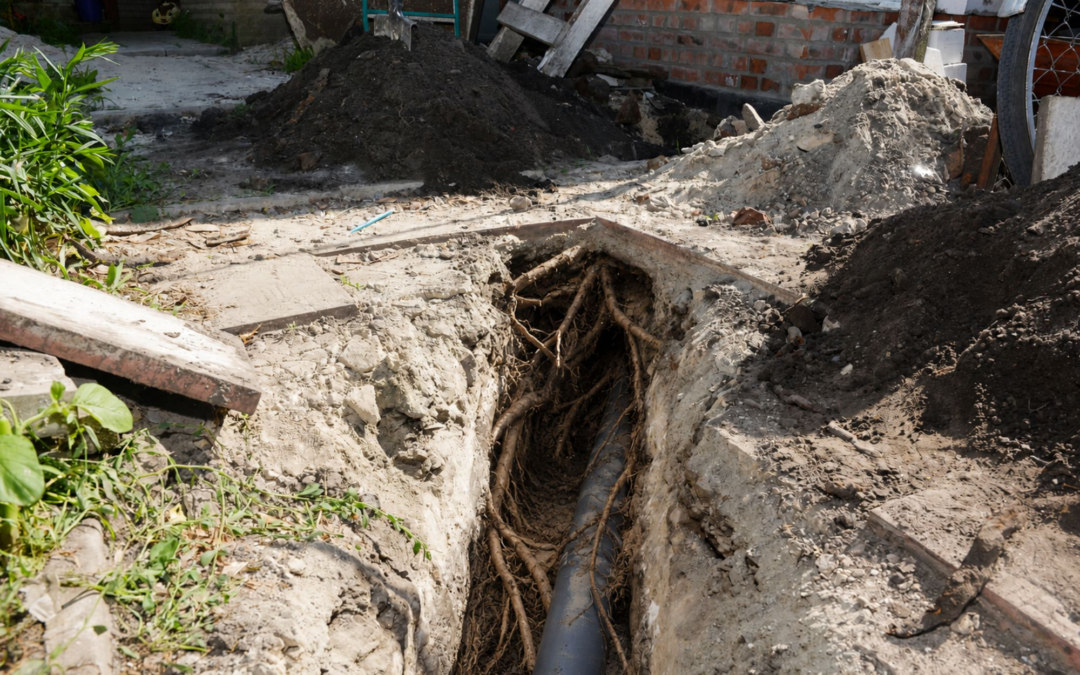
The symptoms of tree roots in sewer line pipes often start with slow drains, recurring clogs, gurgling toilets, or sewer odors. These signs can look like a normal drain problem at first. For homeowners and small property owners in Northern Westchester and Putnam County, the pattern matters more than any single symptom.
Several fixtures slowing at once, a clog that returns after clearing, or wastewater rising through a basement floor drain may point to a deeper sewer line problem. When several warning signs appear together, or sewage begins backing up, the sewer line should be inspected to identify the cause and determine the appropriate repair.
What Are the Symptoms of Tree Roots in a Sewer Line?
The main symptoms of tree roots in a sewer line include multiple slow drains, recurring clogs, gurgling sounds, poor toilet flushing, sewer odors, wastewater backups, and changes in the yard above the pipe. One symptom alone does not confirm root intrusion, but several problems appearing together or returning after clearing may indicate a blockage in the main sewer line.
Tree roots can enter through cracks, loose joints, or damaged pipe connections. As they grow, they catch waste and gradually restrict wastewater flow. A higher water bill or reduced water pressure is not a reliable sign because those issues usually involve the pressurized water-supply system rather than the sewer line.
1. Multiple Drains Slow Down Together
A single slow sink usually points to hair, soap, grease, or debris near that fixture. When the kitchen sink, bathtub, toilet, and basement floor drain slow down around the same time, the restriction may be in a shared branch or the main sewer line.
Lower fixtures often show trouble first. If several drains change within a short period, the larger drainage system should be checked instead of treating each fixture as a separate clog.
2. The Same Clog Keeps Coming Back
Mechanical sewer cleaning may cut through roots and temporarily restore wastewater flow. However, clearing the blockage does not repair the crack, loose joint, or gap that allowed the roots to enter.
When the clog returns, the sewer line may need a camera inspection to locate the root growth and check the damaged entry point.
3. Toilets and Drains Make Gurgling Noises
Gurgling may occur when air is forced around wastewater trapped behind a partial blockage. A toilet may bubble when a sink drains, or a shower drain may make noise after someone flushes.
Vent problems and ordinary clogs can cause similar sounds. Gurgling becomes more concerning when it affects several fixtures instead of one isolated drain.
4. Toilets Flush Poorly or Wastewater Backs Up
A restricted main sewer line may cause the toilet bowl to rise, drain slowly, or fail to clear. Wastewater may also come up through a bathtub, shower, laundry drain, or basement floor drain.
Stop running water during an active backup. Keep children and pets away from contaminated areas and arrange prompt service to prevent additional wastewater from entering the property.
5. Unpleasant Sewer Odors Appear
Wastewater trapped behind a blockage can produce odors near drains or in the basement. A cracked sewer lateral may also release smells into the surrounding soil or nearby areas of the home.
A dry drain trap can sometimes cause a temporary odor. A smell that persists or appears in several locations requires a broader plumbing inspection.
6. The Yard Turns Wet, Soft, or Unusually Green
A leaking sewer pipe can release moisture and organic material into the surrounding soil. Grass above the damaged section may grow faster, appear greener, or remain damp when the rest of the lawn is dry.
Sprinkler leaks and drainage problems can create similar conditions. A yard change carries more weight when it appears near the sewer route or occurs alongside indoor drainage problems.
7. The Ground Sinks Above the Pipe
A damaged sewer pipe can soften or wash away the soil supporting the surface. This may create a dip, soft spot, or depression above the affected section.
Keep people, pets, and vehicles away from unstable ground. Do not dig until the sewer route and the damaged area have been identified.
How Urgent Are the Warning Signs?
| Urgency Level | Situation | Recommended Action |
| Monitor | One fixture drains slowly with no other symptoms | Check for a local fixture or branch clog |
| Schedule an inspection | Several fixtures are affected or the problem keeps returning | Have the main sewer line and pipe condition checked |
| Request prompt service | Wastewater backs up or sewer odors persist | Stop using affected fixtures and arrange service |
| Keep the area clear | The ground sinks or becomes unstable | Avoid the area until the pipe is inspected |
Repeated plunging, mechanical clearing, or chemical drain treatments may restore flow without repairing the crack, failed joint, or damaged pipe section that allowed the blockage to form. A sewer line inspection can determine whether the pipe needs clearing, repair, or replacement.
How Do Tree Roots Get Into Sewer Pipes?
Tree roots usually enter through an existing crack, loose joint, failed seal, or separated pipe connection. Moisture leaking into the soil attracts small roots, which then grow inside the pipe and catch waste that can slow or block wastewater flow.
Older clay and cast iron pipes are often more vulnerable because their joints and surfaces can deteriorate over time. PVC pipes resist root intrusion when intact, but roots can still enter through damaged or separated sections.
Tree Roots vs. an Ordinary Drain Clog
A normal local clog usually affects one sink, tub, shower, or toilet and may clear fully after the blockage is removed. Root intrusion or another main line problem often affects multiple drains, returns after cleaning, or causes wastewater to rise through lower fixtures. A professional inspection provides the reliable answer.
These patterns help homeowners explain the problem clearly when they call a licensed plumber.
| Factor | Ordinary Local Clog | Possible Root Intrusion or Main-Line Problem |
| Fixtures affected | Usually one | Often several |
| Timing | Isolated event | Several drains may change together |
| Return after clearing | Less likely | More likely |
| Lowest fixtures | Usually normal | May back up first |
| Yard changes | Usually none | Wet soil, lush grass, or sinking may appear |
| Basic snaking | May solve the problem | May create only temporary relief |
| Final diagnosis | Fixture or branch check | Main line and pipe condition must be checked |
Roots are not the only cause of sewer line problems. Grease, wipes, heavy scale buildup, a sagging pipe, a collapsed section, septic tank trouble, or a municipal sewer issue can create similar signs. That is why a symptom list should guide the inspection, not replace it.
How Does a Plumber Confirm Root Intrusion?
A plumber checks which fixtures are affected, whether the clog keeps returning, and whether the problem involves one drain or the main sewer line. After restoring enough flow, a camera inspection may be used to locate roots and check for cracks, separated joints, or collapsed pipe sections. These findings help determine whether the line needs clearing, repair, or replacement.
What Happens If Sewer Roots Are Ignored?
Roots can keep catching waste until the sewer line becomes fully blocked. They may also worsen an existing crack, allow wastewater to leak into the soil, and increase the risk of sewage backups, property damage, erosion, or pipe collapse.
Why the Problem Can Worsen Quickly
A main sewer blockage affects every fixture connected to the line. Flushing toilets, running showers, and using appliances can push more wastewater behind the restriction and force sewage into tubs, toilets, or basement floor drains.
During a backup, stop unnecessary water use and avoid contact with sewage. Untreated wastewater can damage property and create health risks.
Does Root Removal Permanently Fix the Sewer Line?
Root removal can restore flow, but it does not repair the crack, loose joint, or damaged section that allowed roots to enter. A long-term fix may require repairing or replacing the affected pipe.
| Option | Main Purpose | Repairs the Entry Point? |
| Snaking or root cutting | Clears roots and debris | No |
| Hydro jetting | Cleans suitable pipes with high-pressure water | No |
| Targeted pipe repair | Replaces one damaged section | Yes |
| Pipe lining | Seals qualifying cracks or joints from inside | Usually, when the existing pipe remains structurally suitable |
| Pipe bursting | Replaces the old pipe along the same route | Yes |
| Full replacement | Replaces severely damaged piping | Yes |
The right method depends on the pipe material, location, and structural condition. A sewer camera inspection can show whether clearing is enough for now or whether the damaged entry point also needs repair.
Questions to Ask Before Approving Work
A clear proposal should tell you what the service will accomplish now and what may happen later. Ask:
- Did the roots enter through one damaged joint or several pipe sections?
- Is the pipe still strong enough for cleaning?
- Does the proposal only restore flow, or does it repair the entry point?
- What evidence supports pipe lining, pipe replacement, or a spot repair?
- Could the roots return if the pipe stays as it is?
- What parts of the yard, driveway, or building may need access?
- Are inspection, permits, cleanup, and restoration included in the price?
Common Mistakes to Avoid
The most common mistake is treating every repeat sewer clog as a cleaning problem. Another is removing a mature tree before confirming where roots entered. Cutting down the tree does not seal a broken pipe, and decaying roots may remain inside the line.
Homeowners should also avoid choosing a repair from price alone. A lower-cost clearing may be reasonable for a stable pipe, but it may be poor value when the line has severe damage and fails again soon.
What Should You Do If You Suspect Tree Roots?
When you suspect tree roots, record which fixtures are affected, reduce water use during a backup, and arrange a professional inspection. Do not keep flushing toilets to test a blocked main line. Avoid digging near sunken soil or pouring several chemical products into the drain before the pipe condition is known.
Use these steps:
- Check whether one drain or multiple drains are slow.
- Note any gurgling, weak flushing, odors, or basement floor drain activity.
- Look for wet, soft, green, or sunken areas outside.
- Stop using affected fixtures if wastewater starts backing up.
- Keep children and pets away from sewage or unstable ground.
- Tell the plumber about past clogs and previous clearing work.
- Ask for a plain-language explanation of the blockage and pipe condition.
- Confirm whether the proposed work provides temporary relief or a permanent repair.
Regular inspections may make sense for a property with a known history of root blockage, but there is no single schedule that fits every line. The pipe material, past findings, nearby trees, and rate of regrowth should guide the timing.
Local Sewer-Line Concerns in Northern Westchester and Putnam County
Sewer-line conditions vary across Northern Westchester and Putnam County. Properties may have different pipe materials, underground layouts, access points, and connections to municipal sewer or septic systems.
Mature trees, finished basements, driveways, patios, additions, steep yards, and limited access can affect inspection and repair options. On septic properties, a sewage backup may involve the building sewer, tank, pump, or drain field rather than a public sewer main.
The plumbing system and property conditions should be evaluated before deciding on a repair method.
Conclusion
Several slow drains, repeat clogs, gurgling, sewage odors, and yard changes can point to roots or another main sewer line problem. The safest next step is to identify where the restriction sits and whether the pipe remains sound. Clearing restores flow, but repairing the entry point helps prevent the same failure.
Goldberg Plumbing & Heating has served Northern Westchester and Putnam Counties for more than 40 years. If these warning signs keep returning or affect several fixtures, contact the team to schedule a sewer line evaluation before the blockage or pipe damage worsens.
FAQs
How serious are tree roots in a sewer line?
Tree roots can cause a partial blockage, complete blockage, sewage backup, or worsening damage at an existing pipe opening. The problem is more serious when multiple drains are affected, sewage enters the home, or the ground begins to sink. Early inspection can help separate a manageable root blockage from a severely damaged pipe.
Does homeowners insurance cover tree roots in a sewer pipe?
Standard homeowners insurance often excludes sewer-line damage caused by age, wear, maintenance issues, or gradual root intrusion. Sewer-backup damage and underground service-line repairs may require separate coverage, so homeowners should review their policy or ask their insurer what is included.
How much does it cost to fix tree roots in a sewer line?
Costs vary by pipe condition, access, and repair method. Angi’s 2026 national estimates place root removal at about $100–$1,000, sewer-line repair at $1,100–$4,100, and full replacement at $3,000–$25,000. Local pricing in Northern Westchester and Putnam County may differ.
What is the best way to get rid of tree roots in a sewer line?
The best method removes the blockage without damaging the pipe and then addresses the opening that allowed roots to enter. A sound pipe may only need professional clearing and monitoring, while a cracked, separated, or collapsed line may need targeted repair, lining, pipe bursting, or replacement. A camera inspection or other direct evaluation helps match the method to the pipe instead of relying on guesswork.