
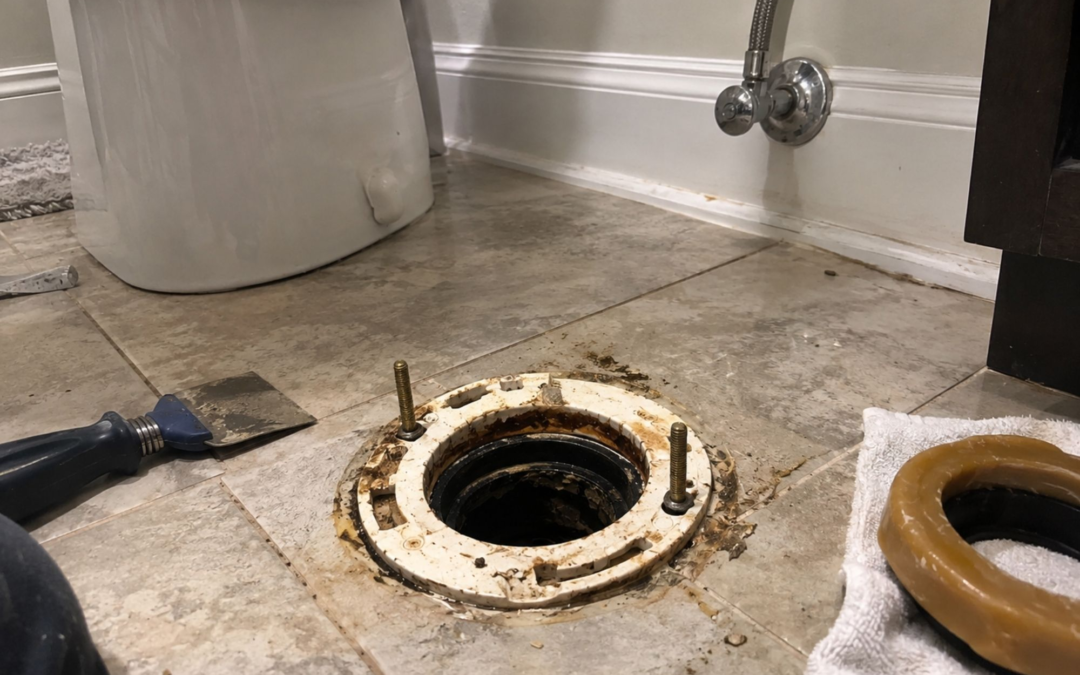
A toilet that rocks, leaks at the base, or will not stay tight may have a problem below the toilet bowl. Toilet flange repair addresses the fitting that connects the toilet to the drain pipe and provides mounting points for the closet bolts. For homeowners in Yorktown Heights, the right fix depends on what is actually damaged once the toilet is removed.
Goldberg Plumbing & Heating handles residential plumbing repairs with clear explanations and practical solutions. If your toilet keeps moving or leaking, contact Goldberg for an inspection before assuming the flange needs replacement.
What Is a Toilet Flange and Why Does It Matter?
A toilet flange, also called a closet flange, connects the toilet bowl to the drain pipe and gives the toilet a secure place to bolt to the floor. A wax ring or another compatible seal sits between the toilet and flange to help create a watertight seal at the drain connection.
A flange can fail in several ways. Bolt slots may crack, metal parts may corrode, screws or other fasteners may loosen, or the flange may sit too low after new tile or other flooring is installed. A broken flange can let the toilet move and disturb the wax ring. A failed wax ring can also cause leaks or sewer odors.
Signs You May Need Toilet Flange Repair
Common warning signs include a toilet that rocks, closet bolts that spin or will not tighten, water near the base after flushing, or visible damage around the bathroom floor. These symptoms can point to flange trouble, but they may also result from an old wax ring, loose fasteners, an uneven floor, or another plumbing problem.
The flange usually needs to be exposed before its condition can be evaluated accurately. After the toilet is removed, the old wax can be scraped away so the flange body, bolt slots, mounting holes, drain opening, and surrounding floor can be inspected more clearly.
Toilet Flange Repair vs. Replacement: What Determines the Fix?
Not every damaged flange needs replacement. Minor damage to the outer ring or bolt slots may be repairable with a flange repair ring, while an otherwise sound flange that sits too low may be raised with a flange extender. Severe corrosion, major cracks, or damage to the flange body or drain connection may require a new flange.
The repair also has to match the existing pipe material, flange design, floor height, and connection method. PVC, ABS, and cast iron systems can require different parts and installation methods, so the condition of the existing flange matters more than choosing a repair product based on appearance alone.
| Flange Condition | Possible Approach |
| Broken or worn bolt slots with a solid flange body | Repair ring |
| Sound flange that sits too low | Flange extender or spacer |
| Loose fasteners with an intact flange | Re-secure with appropriate fasteners |
| Heavy corrosion or major structural damage | Full flange replacement |
| Damaged drain connection | Further pipe and flange repair may be needed |
A repair ring can recreate solid anchor points for the closet bolts when the main flange body remains usable. An extender attaches to the existing flange to correct height when the flange is otherwise sound. Neither option is meant to cover severe structural damage.
What’s Involved in Toilet Flange Repair?
Toilet flange repair starts with removing the toilet so the flange, drain opening, and surrounding floor can be inspected. The plumber then determines whether the existing flange can be re-secured, repaired with a ring, raised with an extender, or replaced before the toilet is reset with a new seal.
Removing and Inspecting the Toilet
The water supply is shut off, the toilet tank is drained, and the supply line is disconnected before the toilet is removed. The old wax ring is scraped away so the flange, closet bolt slots, fasteners, drain opening, and surrounding floor can be checked for damage.
Repairing, Raising, or Replacing the Flange
A repair ring may provide new mounting points when the flange body is solid, but the bolt slots are broken. If the flange sits too low compared with the finished floor, an extender may correct the height. Severe corrosion, major cracks, or damage to the drain connection may require a new flange instead.
The flange should be securely connected to the drain system and properly fastened to the supporting structure using materials and methods appropriate for the installation. The right repair method depends on the flange condition, pipe material, floor height, and surrounding structure.
Resetting the Toilet
Once the flange is secure, the toilet bowl is aligned over the closet bolts and reset. When a wax ring is used, a new wax ring replaces the old one. The water supply is then reconnected, the tank is refilled, and the toilet is flushed and checked for movement or leaks.
How Much Does Toilet Flange Repair Cost?
Toilet flange repair costs depend on the type of repair needed. Installing a repair ring, raising a low flange, and replacing the entire flange involve different levels of work. Pipe material, access, floor condition, corrosion, and damage to the drain pipe can also affect the final cost.
For general budgeting, a 2026 national cost guide from This Old House lists professional toilet flange repair at about $145 to $165 on average. This is a national estimate rather than a Yorktown Heights-specific price. Actual costs can vary, especially if the plumber finds damaged piping, subfloor problems, tile or concrete work, or a flange that is difficult to remove.
A minor repair may cost less than a full replacement, but the right option depends on the condition of the flange and surrounding plumbing. An inspection can show whether the flange can be repaired or needs to be replaced.
When Should You Call a Plumber for Toilet Flange Repair?
Professional help makes sense when the toilet keeps rocking, there is repeated water around the base, the flange is badly corroded, the drain pipe appears damaged, or the surrounding floor feels soft. These conditions may involve more than a worn wax ring and can require work on the flange, piping, or floor connection.
A plumber can remove the toilet, inspect the drain opening and flange, measure flange height, and determine whether a repair ring, extender, new fasteners, or complete replacement is appropriate. Professional evaluation can be especially useful when the flange is cast iron, connected to damaged piping, below the finished floor, or difficult to access.
Get the Right Toilet Flange Repair for the Problem
A rocking or leaking toilet does not automatically mean you need a new flange. The problem could involve the wax ring, damaged bolt slots, incorrect flange height, loose fasteners, corrosion, or a damaged drain connection, so the right repair starts with inspecting the components beneath the toilet.
If you need toilet flange repair in Yorktown Heights, Goldberg Plumbing & Heating can evaluate the connection and explain whether repair, height correction, or replacement makes sense. Contact us to schedule a plumbing evaluation and get clear guidance based on the condition of your toilet, flange, and drain connection.
FAQs
What is the best product for repairing a toilet flange?
The best repair product depends on what is damaged. A repair ring may be suitable for broken bolt slots, while a flange extender may help when the flange sits too low. If the flange body or drain connection is badly damaged, a repair product may not be enough.
Do toilet flange repair kits work?
Yes, toilet flange repair kits can work when the damage is limited, and the existing flange is still structurally sound. They are most useful for restoring mounting points or correcting certain flange-height problems. They are not a substitute for replacing a flange with major cracks, heavy corrosion, or pipe damage.
Is it true that the toilet flange sits above the floor?
In many installations, the toilet flange is installed on top of the finished floor or positioned at a height appropriate for the flange and toilet connection. If an otherwise sound flange sits too low, a compatible flange extender or spacer may be used to correct the height.
What’s the average cost to replace a toilet flange?
A straightforward toilet flange replacement is often quoted in national cost guides at around $145 to $165, but that figure can change once the flange is exposed. Cast iron, damaged flooring, difficult access, or drain-pipe repairs can increase the amount of work. An on-site inspection gives a more useful estimate than a national average alone.