
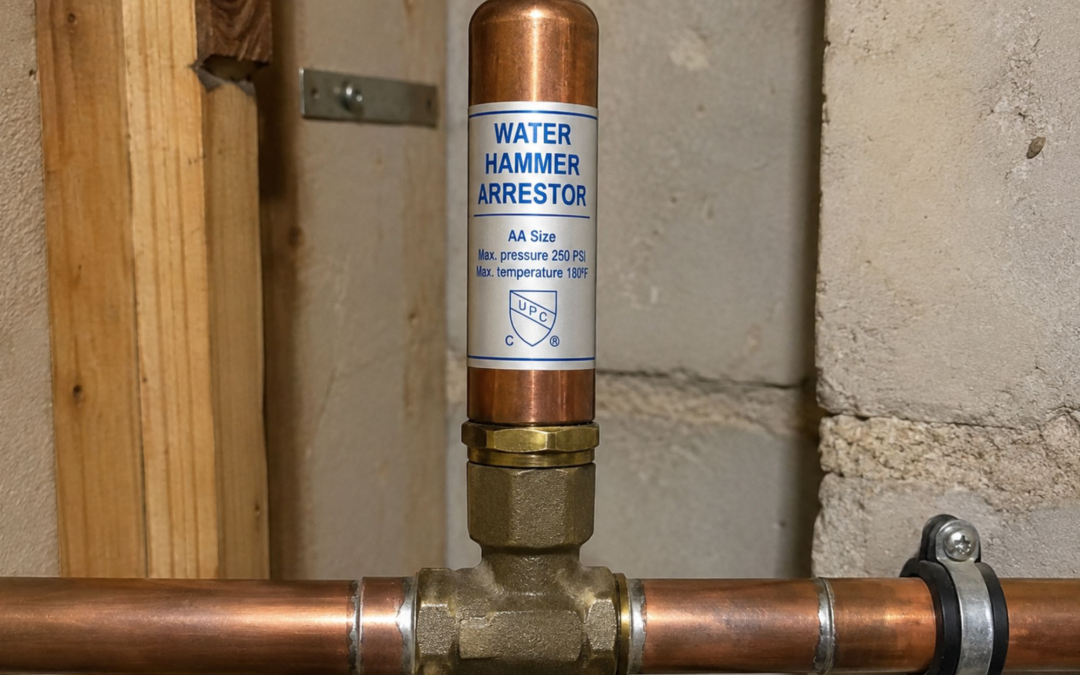
A sudden bang or thump from your pipes can be hard to ignore, especially when it happens right after a washing machine or dishwasher stops filling. One possible cause is water hammer, and a water hammer arrestor may be part of the solution. The important first step is finding out whether the noise is actually water hammer or another plumbing issue.
Because several plumbing problems can create similar sounds, choosing the right fix starts with understanding what a water hammer arrestor is designed to do. This guide explains how these devices work, when they may be needed, where they are typically installed, and why banging can sometimes continue even after one is in place.
What Is a Water Hammer Arrestor?
A water hammer arrestor is a plumbing device that absorbs the pressure surge created when moving water stops suddenly. It provides a cushion for that energy so less of the shock travels through the piping, where it can contribute to banging, vibration, and added stress on plumbing components.
Modern water hammer arrestors commonly use a sealed chamber with a gas cushion separated from the water. Unlike older air-chamber approaches that can lose effectiveness over time, a manufactured water hammer arrestor is designed specifically to control pressure surges caused by quick-closing valves.
The current ASSE/IAPMO/ANSI/CAN 1010-2025 standard covers water hammer arresters. ASSE identifies these devices as products designed to control detrimental surge pressure in water distribution systems.
How Does Water Hammer Happen?
Water hammer happens when water moving through a pipe is forced to stop or change velocity very quickly. The moving water carries energy, so an abrupt valve closure can produce a pressure wave that travels through the plumbing system. That pressure change may cause pipes to bang, thump, shake, or move against nearby materials.
Appliances such as washing machines and dishwashers can be associated with water hammer because they use valves that can interrupt water flow quickly. Other fast-acting valves can create a similar effect depending on the plumbing layout and operating conditions.
The basic sequence looks like this:
- Water moves through the supply pipe.
- A valve closes quickly.
- The moving water comes to a sudden stop.
- A pressure wave travels through the piping.
- Pipes or fittings may move and create a banging sound.
- A properly selected arrestor cushions the resulting pressure surge.
Water hammer should not be defined by one specific household water-pressure number. Hydraulic shock is related to a rapid change in water flow. Static water pressure is a separate condition that may also need to be checked when plumbing noise or pressure-related symptoms are present.
Do You Need a Water Hammer Arrestor?
You may need a water hammer arrestor when a quick-closing valve is creating hydraulic shock in the water-supply piping. A sharp bang that happens immediately when an appliance or valve stops water flow can point toward water hammer, but the sound alone does not confirm that an arrestor is the correct solution.
New York’s current building codes address water hammer where quick-closing valves are used. They require water-hammer arrestors that conform to ASSE 1010 and are installed according to the manufacturer’s instructions. The 2025 New York State building codes became effective on December 31, 2025
Several plumbing conditions can create similar noises, so the timing and location of the sound matter.
| What You Notice | Possible Explanation |
| A sharp bang as a washing machine, dishwasher, or other valve stops filling | Possible water hammer |
| Rattling while water continues to run | Loose or poorly supported piping |
| Noise from several fixtures along with unusual pressure symptoms | Water pressure or another system issue may be involved |
| Banging continues after an arrestor is installed | Placement, selection, pipe support, or the original diagnosis may need another look |
An arrestor works best when it addresses the valve and piping that are actually producing the pressure surge. Simply adding one because pipes make noise may leave the true cause unchanged. Professional plumbing services can help evaluate piping, valves, pressure-related problems, fixtures, and supply lines when the source of banging or movement is unclear.
Where Should a Water Hammer Arrestor Be Placed?
A water hammer arrestor is generally installed near the quick-closing valve responsible for the pressure surge. Positioning the device near the source allows it to respond to the hydraulic shock before that energy travels farther through the branch piping. Exact placement and sizing depend on the plumbing arrangement and the manufacturer’s instructions.
A washing machine is a common example. Depending on the arrestor and plumbing configuration, a suitable device may be installed near the washing machine’s supply connection or incorporated into nearby piping.
Rules such as “install it within six feet” or “it can be installed at any angle” should not be treated as universal instructions. Products differ in connection type, sizing, orientation, and installation requirements, so manufacturer directions matter. Pipe support matters too because an arrestor can reduce hydraulic shock, but it cannot secure loose piping inside a wall, ceiling, cabinet, or floor cavity.
Why Are My Pipes Still Banging With a Water Hammer Arrestor?
Pipes can keep banging after a water hammer arrestor is installed when the device is not addressing the real source of the noise. The arrestor may be poorly located or unsuitable for the application, the piping may be loose, another quick-closing valve may be involved, or the sound may have a different cause.
The Pipes May Be Loose
A water hammer arrestor controls a pressure surge. It does not hold a loose pipe in place.
If piping can move enough to hit framing or another nearby surface, changes in water flow may still produce rattling, knocking, or banging. Pipe supports and contact points may need to be evaluated separately from the arrestor itself.
The Arrestor May Be in the Wrong Location
A water hammer arrestor needs to be installed where it can respond effectively to the pressure surge. A device that is poorly located or not suited to the application may not address the problem as expected.
Placement and sizing are not identical for every system or every product. This is why manufacturer instructions should guide the installation rather than a one-size-fits-all rule.
The Sound May Have Another Cause
Not every plumbing bang is water hammer. Loose piping, changes in system pressure, pipe movement, valves, and other plumbing conditions can create noises that sound similar.
The timing of the noise can provide useful clues, but it does not give a complete diagnosis. If an arrestor is already installed and the banging continues, checking the larger plumbing system may be more useful than automatically adding another device.
Can Water Hammer Damage Your Plumbing?
Repeated water hammer can expose pipes, fittings, valves, and connected components to additional mechanical stress. One isolated thump does not prove that damage has occurred, but repeated hydraulic shock is a condition worth investigating, particularly when the noise becomes stronger or is accompanied by leaking or noticeable pipe movement.
Water hammer arrestors covered by ASSE 1010 are specifically intended to address detrimental surge pressure in water distribution systems.
Whether a particular plumbing system has been damaged cannot be determined from sound alone. The condition of the pipes and fittings, water pressure, plumbing layout, pipe support, valve operation, and other factors all affect what is happening within the system.
When Should You Call a Plumber for Banging Pipes?
Consider having the plumbing checked when banging happens repeatedly, becomes more forceful, occurs around several fixtures, continues after a water hammer arrestor has been installed, or appears along with leaks or unusual water-pressure symptoms. An inspection can help separate hydraulic shock from loose piping and other possible causes.
A plumber may need to look at when the sound happens, which fixture or valve triggers it, how accessible piping is supported, and whether the system pressure is appropriate. Depending on the findings, the appropriate correction could involve a water hammer arrestor, pipe support, a valve-related repair, pressure correction, or another plumbing repair.
If the cause is uncertain, identifying the source before replacing or adding parts can help avoid repairs that do not address the actual problem.
Get Help With Banging Pipes in Northern Westchester
A water hammer arrestor can be an effective solution when a quick-closing valve is creating hydraulic shock, but it is not a universal fix for every noisy pipe. The appropriate repair depends on the source of the noise, valve operation, pipe support, water pressure, and the design and condition of the plumbing system.
If banging, shaking, or unusual pipe noise keeps returning, Goldberg Plumbing & Heating can inspect the plumbing system, help identify what may be causing the problem, and recommend a repair based on what the system actually needs. We serve homeowners throughout Northern Westchester and Putnam Counties. If you need help with persistent pipe noise, contact us to schedule an evaluation.
FAQs
Where should a water hammer arrestor be placed?
A water hammer arrestor is generally placed near the quick-closing valve that is producing the hydraulic shock. Exact placement depends on the piping layout, arrestor design, and manufacturer’s directions. Installation should be based on the product requirements and the actual source of the surge.
Do water hammer arrestors actually work?
Yes, water hammer arrestors are designed to control pressure surges caused by rapid changes in water flow. ASSE 1010 establishes product requirements for water hammer arresters used in water distribution systems. They will not correct noises caused by unrelated problems, such as a loose pipe striking framing.
What does a water hammer arrestor do?
A water hammer arrestor absorbs or cushions the pressure surge created when moving water stops quickly. This reduces the amount of hydraulic shock transferred through the plumbing system. When water hammer is the actual cause of the noise, a correctly selected and installed arrestor can help reduce the associated banging.
Why are my pipes still banging with a water hammer arrestor?
The pipes may still bang because the arrestor is poorly placed, is not suited to the application, or is not addressing the valve creating the surge. Loose piping or a different plumbing condition can also create similar sounds. An inspection can help identify the source before additional devices are installed.