
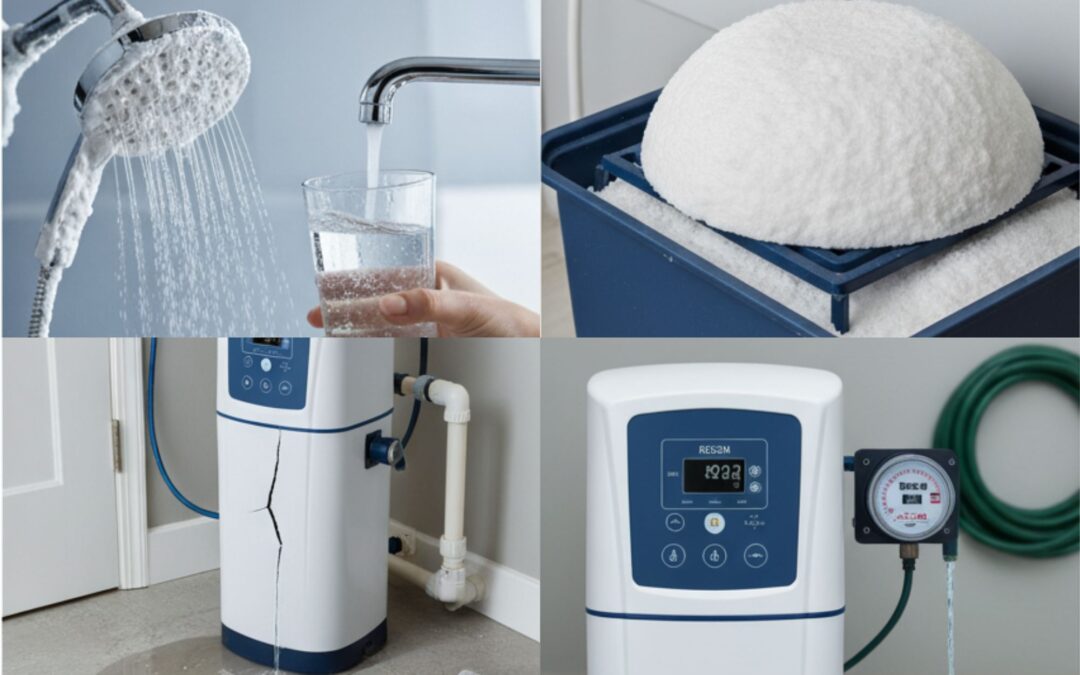
Water softener problems are issues that prevent your system from properly removing hardness minerals like calcium and magnesium, leading to scale buildup, low water pressure, or even system failure. The most common water softener problems include salt bridges, resin tank failure, discolored water, and units that stop regenerating. Some of these can be solved with basic troubleshooting, while others require the expertise of a licensed professional.
For homeowners in Jefferson Valley, NY, hard water is a common concern. Without a properly functioning water softener, you may face clogged pipes, poor appliance performance, and unpleasant-tasting water. In this guide, we’ll cover the most common water softener problems, what causes them, and how to know when it’s time to call a professional. If your water system needs attention, Goldberg Plumbing can help.
Common Water Softener Problems
Water softeners play a crucial role in protecting your plumbing, appliances, and even your skin and hair from the effects of hard water minerals. However, like any system, they can run into issues. Understanding the most common water softener problems helps you act quickly before small problems turn into expensive repairs.
Salt Bridges and Salt Clogs
A salt bridge occurs when hardened salt forms a crust in the brine tank, preventing proper regeneration. This often leads to insufficient softening and hard water running through your system. While breaking a salt bridge can sometimes be done with a broom handle, persistent salt clogs may require a plumber to inspect the brine line and ensure adequate salt levels.
Resin Tank Failure
Resin beads inside the resin tank are responsible for the ion exchange process that makes softened water possible. Over time, resin beds break down, leading to discolored water or reduced efficiency. Resin replacement is a professional repair that ensures your system functions correctly.
System Fails to Regenerate
The regeneration cycle is essential for recharging the resin with sodium ions. If the timer settings malfunction, or if there is an issue with the control valve, your water softener may stop regenerating. This often leads to hard water in your taps and scaling inside appliances like your water heater.
Low Water Pressure and Clogged Valves
Accumulated minerals, sediment, or improper installation can cause clogs in the control head, bypass valve, or drain line. This reduces water flow throughout your home and places strain on the unit. A professional plumber can inspect the valves and motor to ensure the system is functioning correctly.
Discolored or Smelly Water
A failing water softener may produce brown, yellow, or smelly water. This can be caused by degraded resin, bacteria growth in the brine tank, or a malfunctioning control head. Discolored water is a warning sign that professional service is needed immediately.
Why Jefferson Valley Homes Face These Issues
In Jefferson Valley and nearby communities like Yorktown and Somers, homeowners face unique water challenges. The local water supply often contains high levels of minerals, iron, and sulfur. These naturally occurring elements accelerate scaling in pipes, create sulfur odors, and shorten the lifespan of resin tanks.
For example, many Jefferson Valley homes with well water experience iron staining on sinks and tubs, while households connected to municipal water may still deal with hard water minerals that affect appliances. These conditions make water softener systems work harder, leading to salt bridges, clogged valves, and resin bed breakdown more frequently than in regions with lower mineral content.
Because these problems are tied directly to Jefferson Valley water conditions, regular maintenance and timely repairs are essential. Goldberg Plumbing’s team has decades of experience addressing these local issues, giving homeowners peace of mind that their systems will continue to perform effectively.
DIY Fixes vs Professional Repairs
Not every water softener issue requires professional service right away. Some problems can be addressed with basic troubleshooting, while others demand licensed expertise to prevent costly damage.
Quick DIY Fixes Homeowners Can Try
Simple water softener troubleshooting steps can resolve issues like salt bridges or clogged drain lines. For example, if your unit isn’t softening water, check the brine tank for salt crusts and break them carefully with a broom handle. Flushing the brine tank and ensuring timer settings are correct can also restore proper functioning. Always consult the user manual before making adjustments.
Problems That Require a Professional
When the resin bed fails, the motor stops running, or a control valve malfunctions, repairs should be handled by a licensed plumber. These complex problems require specialized tools and knowledge to inspect, repair, or replace components safely. In Jefferson Valley, where water systems are under extra strain from mineral content, timely professional service prevents long-term plumbing damage.
For complex water softener problems in Jefferson Valley, Goldberg Plumbing provides expert repair and replacement, ensuring your home continues to enjoy softened water without interruption.
Preventive Maintenance Tips
Preventive maintenance is one of the best ways to avoid water softener problems and extend the lifespan of your system. Homeowners can handle basic tasks, while annual inspections from a professional plumber provide added protection.
Homeowner Maintenance Checklist
Regular upkeep keeps your water softener functioning correctly. Always use high-quality salt, refill salt levels properly, and avoid letting the tank run completely dry. Cleaning the brine tank once a year helps prevent bacteria buildup and salt scaling. Testing water hardness periodically ensures the system is softening as expected.
Professional Maintenance Services
Professional plumbers provide advanced inspections that catch issues before they become expensive repairs. Services include testing water supply quality, inspecting resin beads for wear, checking the control head for error codes, and ensuring proper functioning of valves and float controls. Annual professional service is particularly important in Jefferson Valley homes with mineral-heavy well water.
Repair vs Replacement – What’s Best?
Deciding between repairing or replacing a water softener depends on the severity of the problem, the system’s age, and the cost of the fix.
A repair is often the best choice for younger systems or minor issues such as clogged drain lines or motor errors. However, if your unit is more than 10–15 years old, or if repair costs exceed $500, replacement is usually the smarter investment.
Here’s a quick comparison to help homeowners:
| Problem | Repair Option | Replace? |
|---|---|---|
| Salt bridge | Break crust, refill salt | No |
| Resin bed failure | Professional resin repair | Replace if system is 10+ years |
| Control valve issues | Repair $200–$400 | Replace if recurring |
| Leaks/clogs | Minor repair possible | Replace if frequent or severe |
Cost of Water Softener Repairs in Jefferson Valley
The cost of water softener repairs varies depending on the issue and the condition of your unit. Minor fixes such as clearing a clogged brine line or adjusting timer settings may cost $100–$200. Resin replacement or valve repairs typically run between $300–$500.
If your system requires frequent service or is near the end of its lifespan, replacement may be more cost-effective. A new water softener system generally costs between $1,000 and $3,000 depending on the type and capacity.
Conclusion
Water softener problems can range from minor salt bridges to major resin tank failures. Addressing these issues early helps protect your plumbing, extend the life of appliances, and keep your home’s water clean and safe. For Jefferson Valley homeowners, where mineral-heavy water is a common challenge, regular maintenance and timely repairs are especially important.
At Goldberg Plumbing, we assist homeowners in Jefferson Valley and across Northern Westchester with expert water system solutions. Our licensed plumbers provide fast, reliable water softener repairs and replacements so your home always has clean, softened water. Contact us today to schedule your service and restore your water system.
FAQs
How can you tell if your water softener is going bad?
Signs include hard water spots returning, reduced water pressure, frequent salt bridges, or discolored water. If your unit is older than 10 years, it may be nearing the end of its lifespan. You can schedule a diagnostic evaluation in Jefferson Valley with Goldberg Plumbing for a professional assessment.
What problems can a water softener cause?
When not functioning correctly, a water softener can produce salty-tasting water, leaks, or clogs in the drain line. Improper installation or poor maintenance may also lead to malfunctions. A professional plumber can inspect your system to prevent these issues.
What is the typical lifespan of a water softener system?
Most systems last between 10–15 years with proper care. In Jefferson Valley, mineral-heavy water can shorten that lifespan without regular maintenance. Scheduling annual inspections helps maximize the unit’s efficiency and durability.
What are the problems with soft water?
Softened water contains sodium ions, which can be a concern for individuals on low-sodium diets. Some people also find it leaves a slippery feel on skin. Despite this, soft water protects plumbing and appliances from hard water damage, making it the preferred option for most households.