
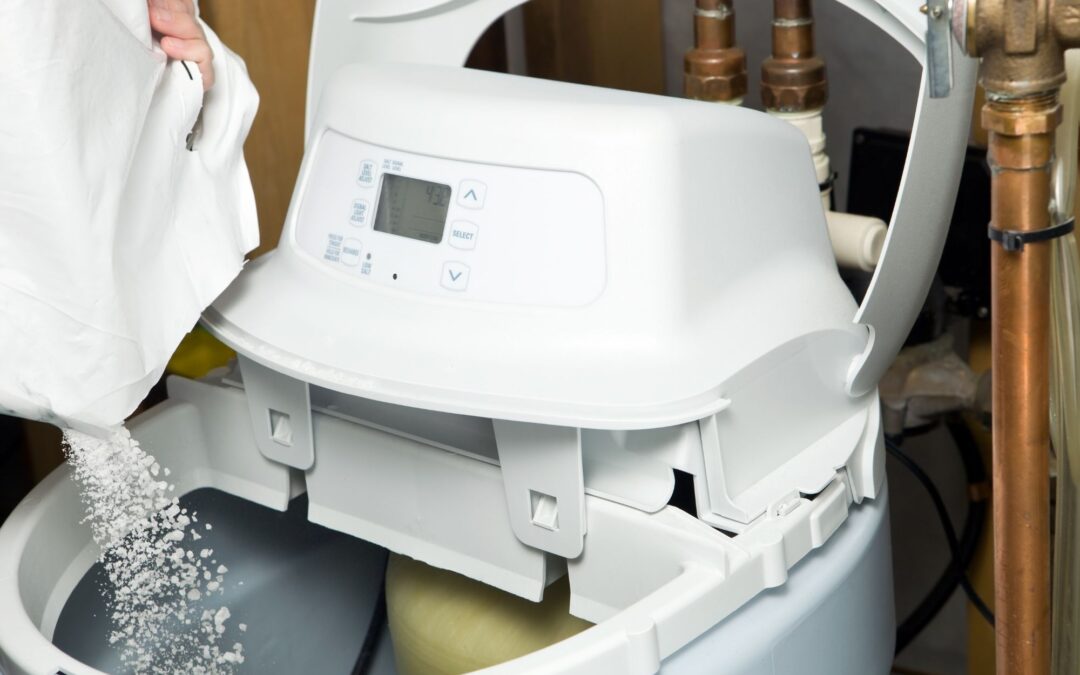
A water softener is a device that removes hardness minerals like calcium and magnesium from your water, providing softened water for your home. This process helps answer the question, what is a water softener, as it prevents limescale build-up in your pipes and appliances, and ensures better quality water for everyday use. In this article, we’ll explore how water softeners work and the benefits they offer.
Key Takeaways
- A water softener removes calcium and magnesium minerals from hard water through an ion exchange process, improving water quality and extending the lifespan of plumbing and appliances.
- The system consists of three main components: the mineral tank, brine tank, and control valve, each playing a critical role in the water softening and regeneration processes.
- While providing various benefits such as improved water quality and reduced appliance maintenance costs, water softeners can also have environmental impacts related to water waste and chlorides discharge.
Defining a Water Softener
A water softener is a specialized system designed to remove calcium and magnesium minerals from your water supply, transforming hard water into soft water. The process of water softening involves the removal of these hardness minerals, which are the main culprits behind limescale buildup and other water quality issues. Reducing hard minerals significantly improves water quality, making it more suitable for daily use and extending the life of your plumbing and household appliances.
The removal of calcium and magnesium is achieved through a process called ion exchange, where these mineral ions are replaced with sodium or potassium ions to remove sodium. This not only softens the water but also enhances its quality, making it gentler on your skin and more effective for cleaning.
A water softening system provides benefits such as better-tasting drinking water, more efficient washing machines, and less soap scum and limescale buildup, all of which can be enhanced by a water treatment system.
How a Water Softener Works
Water softeners operate through a fascinating process called ion exchange, which involves:
- Resin beads within the water softener that are negatively charged
- These beads attracting and holding onto the positively charged calcium and magnesium ions found in hard water
- Hard water flowing through the water softening system, where the resin beads trap the hardness minerals
- The resin beads replacing the trapped calcium and magnesium ions with sodium or potassium ions This process results in softened water.
The resin beads are typically made from microporous polystyrene and can last for decades, effectively softening water as it flows through the system. The ion exchange process is crucial because it ensures that the calcium and magnesium ions are removed efficiently, preventing the common problems associated with hard water such as stiff laundry, dry skin, and clogged pipes.
As a small amount of sodium or potassium is released into the water, this process also helps maintain the balance of minerals in your water supply. Understanding how a water softener works helps you appreciate the value it brings to your household.
The ion exchange process enhances water quality, protects your appliances, and ensures you receive the best possible soft water for your daily needs.
Key Components of a Water Softener System
A typical water softener system is composed of three main components:
- The mineral tank
- The brine tank
- The control valve Each of these components plays a crucial role in the water softening process, working together to ensure that hard water is effectively softened and that the system operates efficiently.
Each component has a specific function and importance in the system.
Mineral Tank
The mineral tank is the heart of the water softener system. It is where the actual water softening takes place. As hard water enters the mineral tank, it passes through a bed of resin beads that:
- attract and hold onto the calcium and magnesium ions
- are designed to facilitate the ion exchange process
- ensure that hardness minerals are removed from the water supply, maintaining optimal mineral content.
The resin beads are typically made from durable polystyrene and can effectively soften water for up to twenty years or more. Capturing dissolved minerals ensures the water leaving the tank is free of hardness minerals, improving water quality and preventing potential damage to your plumbing and appliances. Negatively charged resin beads help in this process.
Brine Tank
The brine tank is an essential component of the water softening system because it stores the concentrated salt solution needed to regenerate the resin beads in the mineral tank. This tank is filled with water softener salt, usually sodium chloride, which dissolves to create the brine solution used during the regeneration process.
The brine tank must remain connected to the water softener system, as it supplies the necessary brine solution to flush out the accumulated hardness minerals from the resin beads. Regular regeneration of the resin beads by the brine tank maintains the efficiency and longevity of the water softener.
Control Valve
The control valve is the brain of the water softener system. It:
- Regulates the flow of water through the system
- Automatically initiates the regeneration cycle when the resin beads become saturated with hardness minerals
- Monitors water usage and adjusts the regeneration process, ensuring efficient and effective operation, including the bypass valve.
This component is crucial for the overall functionality of the water softener, as it helps to maintain consistent water quality and prevents downtime during the regeneration process. Timely regeneration by the control valve enhances the operational efficiency of the water softener, making it a key component of the system.
The Regeneration Process
The regeneration process is a critical aspect of maintaining a water softener’s efficiency. It involves:
- Resin beads in the mineral tank becoming saturated with hardness ions.
- The system undergoing regeneration to restore its softening capacity.
- This process typically occurring during periods of low water use, such as between 2 AM and 4 AM, to minimize disruption.
The regeneration process involves five stages:
- Fill
- Brining
- Brine rinse
- Backwash
- Fast rinse
During the brining stage, a brine solution from the brine tank is introduced into the mineral tank, allowing the hardness minerals to be flushed out. The backwash stage then reverses the water flow to clear out any residual sediments and dirt from the resin tank, ensuring that the system remains clean and efficient.
Traditional salt-based systems require periodic recharging with sodium chloride to maintain their effectiveness. The process involves:
- Flushing the resin beads with a brine solution
- Replacing the hardness ions with sodium or potassium ions
- Ensuring the system can continue to provide softened water
This cyclical regeneration process is essential for the longevity and performance of the water softening system.
Types of Water Softeners
There are various types of water softeners available, each with its own advantages and suitable applications. The most common types include salt-based water softeners, salt-free water softeners, and dual-tank water softeners.
Understanding the differences between these types can help you choose the best water softening system for your home.
Salt-Based Water Softeners
Salt-based water softeners are the most prevalent type and utilize sodium chloride to soften water by removing hardness minerals. These systems operate through the ion exchange process, where calcium and magnesium ions are replaced with sodium ions. This method effectively softens water and prevents limescale buildup in plumbing and appliances.
The ion exchange process in salt-based systems involves resin beads that attract and hold onto hardness minerals, exchanging them for positively charged sodium ions. This process is highly efficient and can significantly improve water quality. Some salt-based systems use a counter-current regeneration cycle, which is more efficient and uses less salt and water.
Despite their effectiveness, salt-based water softeners do require regular maintenance, including replenishing the salt supply and ensuring the brine tank is functioning correctly. However, their ability to provide consistently softened water makes them a popular choice for many households.
Salt-Free Water Softeners
Salt-free water softeners offer an alternative approach to addressing water hardness. Instead of removing hardness minerals, these systems use Template Assisted Crystallization (TAC) to convert calcium and magnesium into micro-crystals that do not adhere to surfaces. This process prevents limescale buildup without the need for salt or a brine tank.
Salt-free systems are particularly suitable for households looking to avoid the maintenance associated with salt-based systems. Since they do not remove the hardness minerals but rather condition the water, these systems do not contribute to the sodium levels in your drinking water. Additionally, they are often viewed as more environmentally friendly due to the absence of salt discharge.
While salt-free water softeners might not be as effective as salt-based systems in extremely hard water conditions, they offer a viable solution for many households, especially those concerned with reducing their environmental impact with a water conditioner.
Dual-Tank Water Softeners
Dual-tank water softeners are designed to provide continuous soft water availability by featuring two resin tanks that work alternately. When one tank undergoes regeneration, the other tank remains online, ensuring that there is no interruption in the supply of softened water.
This design is particularly beneficial for larger households or homes with high water usage, as it eliminates the downtime typically associated with single-tank systems. By maintaining a constant supply of softened water, dual-tank systems enhance convenience and ensure that your plumbing system always has access to high-quality water.
Benefits of Using a Water Softener
The benefits of using a water softener are numerous and impactful:
- It prevents damage to plumbing and appliances caused by hard water.
- It reduces scale buildup, which otherwise reduces water flow and damages appliances over time.
- It helps extend the lifespan of your appliances and plumbing systems.
In addition to protecting your home infrastructure, water softeners can also be cost-effective. Preventing scale buildup reduces the need for frequent repairs and replacements of household appliances, leading to significant long-term savings. The use of soft water also means that less soap and detergent are required for cleaning, making household chores more efficient and reducing overall cleaning costs.
Furthermore, the improved water quality provided by a water softener can enhance your daily life in several ways:
- Soft water is gentler on your skin and hair, reducing dry hair and irritation.
- It helps keep your laundry soft and bright.
- It keeps your dishes free from soap scum and water spots.
Overall, using a high quality water softener can lead to a more comfortable and efficient home environment.
Considerations Before Installing a Water Softener
Before installing a water softener, several important considerations need to be taken into account:
- Determine the hardness level of your water.
- Use a test kit or send a sample to an independent laboratory to measure hardness.
- If your water hardness level is greater than 7 grains per gallon or 120 mg/L, a water softener is recommended.
The installation location is also crucial. A dry, level place like a basement or garage, close to the water main line, an electrical outlet, and a drain hose for the brine solution is ideal. Additionally, you should consider the type of regeneration system that best suits your needs. Demand regeneration systems activate based on actual water usage, while time-initiated regeneration relies on a preset schedule.
Finally, consider the size and capacity of the water softener. This depends on factors such as the size of your household, the number of occupants, and your water hardness level. Proper assessment and selection will ensure that the water softening system meets your household’s requirements and operates efficiently.
Environmental Impact of Water Softeners
While water softeners offer numerous benefits, it is also important to consider their environmental impact. Key points about water consumption include:
- The regeneration cycle of a water softener can consume a significant amount of water, ranging from 35 to 70 gallons each time, depending on the size of the system and the hardness of the water.
- A water softener typically wastes around 8,000 gallons of water each year.
- This water waste can be a concern in areas where water conservation is critical.
This is the average consumption observed.
Another environmental consideration is the discharge of chlorides into municipal wastewater systems. The brine solution used in water softeners contains high levels of sodium chloride, which can contribute to elevated chloride levels in wastewater. Excessive chloride discharge can be toxic to aquatic organisms, affecting both plants and animals in natural water bodies. Many wastewater treatment facilities struggle to remove chlorides effectively, resulting in significant amounts entering natural water systems.
Consider high-efficiency water softeners designed to minimize salt usage and wastewater production to mitigate these environmental impacts. Additionally, centralized water softening systems can reduce the overall chloride concentration in wastewater compared to multiple household softeners.
By choosing more efficient and environmentally friendly options, you can enjoy the benefits of soft water while reducing your environmental footprint.
Summary
In conclusion, water softeners play a vital role in improving water quality by removing hardness minerals such as calcium and magnesium. The ion exchange process, facilitated by resin beads, effectively softens water and prevents the common issues associated with hard water. Understanding the key components of a water softening system, including the mineral tank, brine tank, and control valve, helps in appreciating its functionality. The regeneration process ensures that the system remains efficient and effective over time. With various types of water softeners available, including salt-based, salt-free, and dual-tank systems, there is a solution for every household. While the environmental impact of water softeners should be considered, choosing high-efficiency models can help mitigate these concerns. By installing a water softener, you can enjoy numerous benefits, including prolonged appliance lifespan, reduced cleaning costs, and improved overall water quality.
Frequently Asked Questions
What is a water softener and how does it work?
A water softener is a system that eliminates hardness minerals, such as calcium and magnesium, by using ion exchange, whereby these minerals are replaced with sodium or potassium ions. This process effectively softens the water, improving its quality for everyday use.
What are the key components of a water softener system?
The key components of a water softener system include the mineral tank, which contains resin beads for ion exchange, the brine tank for storing the salt solution needed for regeneration, and the control valve that manages water flow and the regeneration process. Understanding these components is essential for effective water softening.
What are the benefits of using a water softener?
The benefits of using a water softener include preventing damage to plumbing and appliances, lowering cleaning and maintenance costs, improving soap and detergent efficiency, and enhancing overall water quality for daily use. These advantages lead to a more efficient and economical household setup.
What should I consider before installing a water softener?
Before installing a water softener, it is essential to evaluate the hardness level of your water, select an appropriate installation location, choose the type of regeneration system, and determine the size and capacity that matches your household’s needs. Taking these factors into account will ensure optimal performance and satisfaction.
What is the environmental impact of water softeners?
Water softeners can negatively affect the environment by generating water waste during regeneration and discharging harmful chlorides into wastewater. Opting for high-efficiency systems can significantly mitigate these adverse effects.