
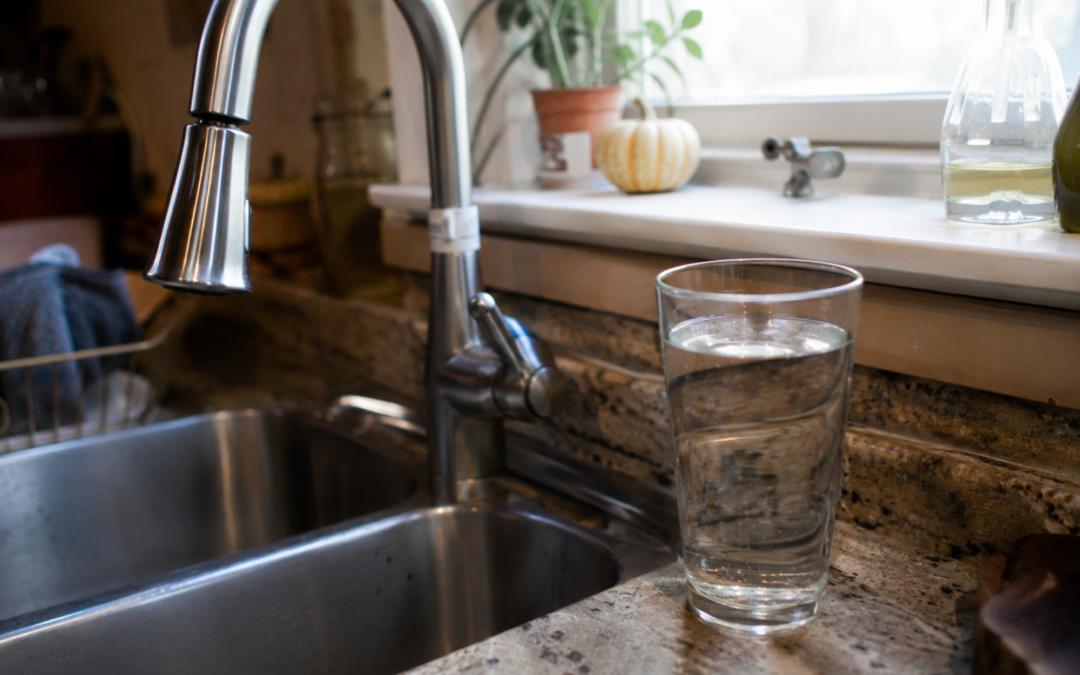
If you have ever turned on the tap and asked, “why does my water taste like metal?”, you are not alone. A metallic taste in drinking water is a common concern for homeowners in Northern Westchester and Putnam County, especially in homes with private wells, aging pipes, or older plumbing fixtures.
This guide is for homeowners who want to understand what may be causing the strange taste, when it may point to a larger water quality issue, and what steps to take next. If the taste appears suddenly or affects more than one tap, contact a professional water system analysis before replacing filters or guessing at the cause.
Why Does Water Taste Like Metal?
Water usually tastes like metal because dissolved minerals or trace metals have entered the water supply. The most common causes include iron, manganese, copper, zinc, low pH water, aging pipes, galvanized steel, or corrosion inside the plumbing system.
A metallic flavor can come from the water source itself or from residential pipes inside the home. In many local homes, the issue starts with groundwater supplies that contain iron or manganese. In others, acidic water slowly reacts with copper pipes, galvanized pipes, or older plumbing materials.
Here are the most common reasons water can taste metallic:
- Iron in well water
- Manganese in groundwater
- Copper from aging pipes
- Zinc from galvanized steel
- Low pH or acidic water
- Pipe corrosion
- Stagnant water sitting in pipes
- Water heater sediment or corrosion
A single taste change does not always mean there is a health risk. However, metallic-tasting water should be tested when it appears suddenly, affects several taps, or comes with staining, odor, or discoloration.
Is Metallic-Tasting Water Safe to Drink?
Metallic-tasting water is not always unsafe, but the cause matters. Iron and manganese often affect taste, staining, and plumbing performance more than health. Lead and high copper levels can create serious health concerns, especially for children, pregnant women, and people with health issues.
The U.S. Environmental Protection Agency states that lead can enter drinking water when plumbing materials corrode, especially in systems with lead pipes, faucets, or fixtures. Lead exposure can harm children even at low levels, so homeowners should take any possible lead concerns seriously.
The CDC also notes that private well owners are responsible for testing their own well water because EPA public water system rules do not apply to privately owned wells. That matters for homes in areas like Mahopac, Somers, Yorktown Heights, and surrounding Putnam County communities where private wells are common.
| What You Notice | What It May Mean | What To Do |
| Mild metallic taste only | Minerals or stagnant water | Run the tap, then test if it continues |
| Metallic taste with brown staining | Iron or manganese | Schedule water testing |
| Blue green stains | Copper corrosion | Inspect plumbing and test water |
| Metallic taste at every tap | Water source or whole-home issue | Request a water system evaluation |
| Older home with possible lead pipes | Potential health risk | Test promptly |
If you are unsure whether the water is safe to drink, do not rely on taste alone. Water testing gives you actual metal content and helps determine the right next step.
Common Causes of Metallic Taste in Tap Water
Metallic taste in tap water usually comes from minerals, plumbing corrosion, water chemistry, or treatment changes. The exact cause depends on whether the taste appears at one tap, every tap, hot water only, or after the water sits unused.
Some causes affect taste only. Others may damage fixtures, reduce water system performance, or point to a deeper water quality issue. A practical way to narrow it down is to match the symptom with the likely source.
Iron
Iron is one of the most common explanations for water tasting metallic, especially in well water. It often creates a rusty or earthy metallic taste and may leave orange or brown staining on sinks, toilets, tubs, and laundry.
Iron usually enters water through groundwater supplies. It may also come from corrosion in older iron or galvanized steel pipes. While iron is not usually a major health risk at low levels, it can stain fixtures, clog treatment equipment, and make drinking water unpleasant.
Manganese
Manganese often appears with iron in groundwater. It can create a metallic aftertaste, dark particles, or black staining around fixtures.
Even when manganese levels are not high enough to create health concerns, the visible staining can be frustrating. It may also point to water treatment needs that a standard water softener alone may not fix.
Copper
Copper can enter water when low pH levels make water more corrosive. When this happens, copper pipes can slowly release metal into the water supply.
Common signs include a bitter metallic taste, blue-green stains, and corrosion around fixtures. A small amount of copper can be normal, but high levels should be tested and addressed.
Lead
Lead is a serious concern because it can harm health even when the water looks clear. It usually enters water through older lead pipes, service lines, solder, or fixtures.
Homes built before modern lead restrictions deserve extra caution. If a home has older plumbing and the water suddenly tastes metallic, testing should come before any assumptions.
Low pH Water
Low pH water is acidic water. It can corrode residential pipes and release metals such as copper, zinc, or lead into the water.
This is one reason a metallic taste may not come from the water source alone. The water chemistry itself may be reacting with the plumbing system.
How To Tell Where the Metallic Taste Is Coming From
The pattern of the taste often gives useful clues. Homeowners can learn a lot by checking whether the issue affects one tap, every tap, hot water, cold water, or water that has been sitting in pipes overnight.
Start with simple observations before buying a filtration system. These checks do not replace professional water testing, but they can help you explain the issue clearly when calling a licensed plumbing and water systems professional.
If Every Tap Tastes Metallic
When every tap has the same metallic taste, the issue may come from the water source, well system, incoming supply, or whole-home plumbing.
This often points to iron, manganese, low pH levels, or another water quality concern. In well water homes, the source may be groundwater. In municipal water homes, it may involve plumbing materials or treatment changes.
If Only One Tap Tastes Metallic
A single tap issue often points to a local fixture or nearby pipe section. The faucet may have worn internal parts, corrosion, or stagnant water sitting in a short plumbing run.
Try running cold water for a few minutes. If the taste improves, stagnant water may be part of the issue. If it returns often, the faucet or local pipe should be inspected.
If Only Hot Water Tastes Metallic
Hot water can taste metallic when the water heater has sediment, corrosion, or worn internal components. Heat can also make some existing water quality issues more noticeable.
If cold water tastes normal but hot water tastes metallic, the water heater deserves attention. Goldberg Plumbing & Heating can evaluate water heater issues and help determine whether repair, flushing, or replacement is needed.
| Pattern | Possible Cause | Best Next Step |
| Every tap tastes metallic | Water source or whole-home issue | Test water |
| One tap tastes metallic | Fixture or local pipe issue | Inspect faucet and nearby plumbing |
| Hot water only | Water heater issue | Evaluate water heater |
| Cold water after sitting | Stagnant water in pipes | Flush tap, then monitor |
| Taste plus odor like rotten eggs | Hydrogen sulfide or bacteria | Test water |
Why Well Water Often Tastes Metallic
Well water often tastes metallic because groundwater can naturally contain iron, manganese, and other trace minerals. These minerals move through rock and soil before entering the well, which means taste and staining can vary by location and season.
This issue is common in homes around Mahopac, Somers, Jefferson Valley, Yorktown Heights, and nearby Putnam County communities. Heavy rain, drought, and groundwater shifts can also change how water tastes from month to month.
For example, a homeowner may notice that their tap water tastes like metal and that orange staining appears around sinks. In many cases, that combination points toward iron. If the staining is darker or black, manganese may be involved.
Private wells need a different approach than public water. Since the homeowner manages the well system, testing is the only reliable way to know what is actually in the water. A professional review may include the well pump, well tank, pressure tank, water treatment equipment, and plumbing connections.
Can Aging Pipes Cause Water To Taste Metallic?
Aging pipes can cause water to taste metallic when corrosion allows metal particles to enter the water. This may happen with copper, galvanized steel, galvanized pipes, older fixtures, or homes with lead plumbing materials.
Pipe corrosion does not always create visible warning signs at first. Sometimes the first clue is a strange taste in the morning or after water has been sitting unused.
Watch for these signs:
- Metallic taste after water sits overnight
- Blue green stains near fixtures
- Brown staining or rusty water
- Lower water pressure
- Visible corrosion on exposed pipes
- Repeated fixture staining after cleaning
A common mistake is assuming a filter will fix everything. If the issue comes from aging pipes, the real solution may involve plumbing repairs or correcting the water chemistry that is causing corrosion.
How Professionals Diagnose Metallic Water Problems
When evaluating metallic-tasting water, a plumbing professional may test pH, hardness, iron, manganese, copper, and other metals. They may also inspect the plumbing system, water heater, well tank, pressure tank, and any existing treatment equipment to determine whether the issue is coming from the water source, corrosion, or equipment failure.
A clear diagnosis matters because metallic taste can come from several sources at once. For example, a home may have iron in well water and low pH levels that also contribute to copper corrosion.
What a Professional Water Test and Inspection Includes
A typical evaluation may include:
- Testing drinking water for metals and water chemistry
- Checking pH level and hardness
- Looking for iron, manganese, copper, lead, zinc, and other trace metals
- Inspecting visible plumbing and fixtures
- Reviewing the well tank, pressure tank, and pump system
- Checking whether hot water and cold water differ
- Reviewing existing water treatment equipment
This process protects homeowners from buying the wrong equipment. A water softener may help with hard water, but it may not remove the metallic taste if iron, manganese, low pH, or pipe corrosion is the real problem.
How To Fix Metallic Tasting Water
The best way to fix metallic-tasting water is to test the water first, then choose the solution based on the cause. Treatment may involve filtration, water softening, pH correction, plumbing repairs, water heater service, or well system improvements.
There is no one-size-fits-all fix. The right solution for iron is different from the right solution for lead, copper, low pH water, or hydrogen sulfide.
Water Treatment Options
A whole-home filtration system treats water at the point where it enters the home. This can help improve taste at every tap when the issue comes from the water source.
Depending on test results, options may include:
- Iron filtration
- Manganese filtration
- Water softener systems
- pH correction systems
- Reverse osmosis for drinking water
- Whole-home water treatment
Reverse osmosis can reduce many dissolved solids and certain metals, but it is usually installed at the point of use for drinking water. A whole-home system may be better when every tap has the same taste problem.
Plumbing Repairs
If testing points toward pipe corrosion, plumbing repair may solve the issue more effectively than filtration alone. This may involve replacing corroded sections, removing outdated galvanized steel, or addressing older plumbing materials.
Plumbing repairs can also protect fixtures, improve performance, and reduce long-term costs. Fixing the source often works better than treating symptoms at one tap.
Well System Improvements
For well water homes, the solution may involve the well tank, pressure system, or treatment equipment. If water pressure changes with the taste, a constant pressure system or booster pump review may be useful.
Goldberg Plumbing & Heating can evaluate well pumps and well tanks, along with water treatment needs to help homeowners choose a practical path forward.
| Cause | Possible Solution |
| Iron | Iron filtration |
| Manganese | Specialized filtration |
| Copper | Plumbing inspection and pH correction |
| Lead | Testing and pipe replacement |
| Low pH | Acid neutralizer or pH correction |
| Hard water | Water softener |
| Water heater issue | Water heater service or replacement |
| Mixed contaminants | Custom water treatment plan |
When Should You Schedule a Water System Analysis?
Schedule a water system analysis when a metallic taste appears suddenly, affects more than one tap, comes with staining, or happens in a home with private well water. Testing helps identify the cause before the issue affects fixtures, plumbing, or drinking water safety.
Homeowners often wait because the water still looks clear. That can be risky because some contaminants, including lead, may not change the color, smell, or clarity of drinking water.
You should schedule testing or inspection if:
- Your water suddenly tastes metallic
- The taste appears at several taps
- Brown staining or blue-green stains appear
- Hot water tastes different from cold water
- You use private well water
- You live in an older home
- Water quality changes after storms or seasonal shifts
- A filter did not remove the metallic taste
Early testing helps avoid common mistakes, such as buying the wrong filtration system, ignoring pipe corrosion, or missing a health risk. It also gives you a clear plan for repair, treatment, or monitoring.
Conclusion
Metallic-tasting water can come from iron, manganese, copper, lead, zinc, low pH levels, pipe corrosion, aging pipes, or well water conditions. Some causes only affect taste, while others may signal a health risk or a deeper plumbing problem.
If your water tastes like metal in Northern Westchester or Putnam County, Goldberg Plumbing & Heating can help identify the source through water testing, plumbing evaluation, and practical water system recommendations. Contact the team to schedule a professional water system analysis and get clear answers before investing in the wrong fix.
FAQs
Is it okay to drink water that tastes like metal?
It may be okay to drink water that tastes like metal, but you should not assume it is safe without testing. Iron and manganese often affect taste and staining more than health, but lead and high copper levels can create health risks. If the taste appears suddenly, affects multiple taps, or comes with staining, have the water tested before continuing to drink it regularly.
What illness makes water taste metallic?
Some illnesses, medications, dental issues, and medical treatments can make water or food taste metallic. However, if several people in the same home notice the same metallic taste from the tap, the water is more likely the cause. In that case, check whether the taste appears in hot water, cold water, one tap, or every tap, then schedule testing if it continues.
How to fix metallic-tasting water?
To fix metallic-tasting water, start with water testing. Once the cause is known, the solution may include iron filtration, manganese filtration, a water softener, reverse osmosis, pH correction, plumbing repairs, or water heater service. Testing helps prevent wasted money on a filtration system that does not match the actual problem.
Why does water taste like metal now?
Water may taste like metal now because of a recent change in water chemistry, groundwater conditions, plumbing corrosion, or water treatment. In well water homes, seasonal changes can shift iron or manganese levels. In older homes, aging pipes may release metals after water sits unused.
Can old pipes make water taste metallic?
Yes, old pipes can make water taste metallic. Copper, galvanized steel, galvanized pipes, and lead plumbing materials can release trace metals as corrosion develops. If the metallic taste is stronger after water sits overnight, the plumbing system may be part of the problem.
Should I get my water tested before installing a filter?
Yes, you should get your water tested before installing a filter. A test shows whether the issue comes from iron, manganese, copper, lead, low pH, bacteria, hydrogen sulfide, or another cause. The right test result helps you choose the right water treatment solution and avoid unnecessary costs.